
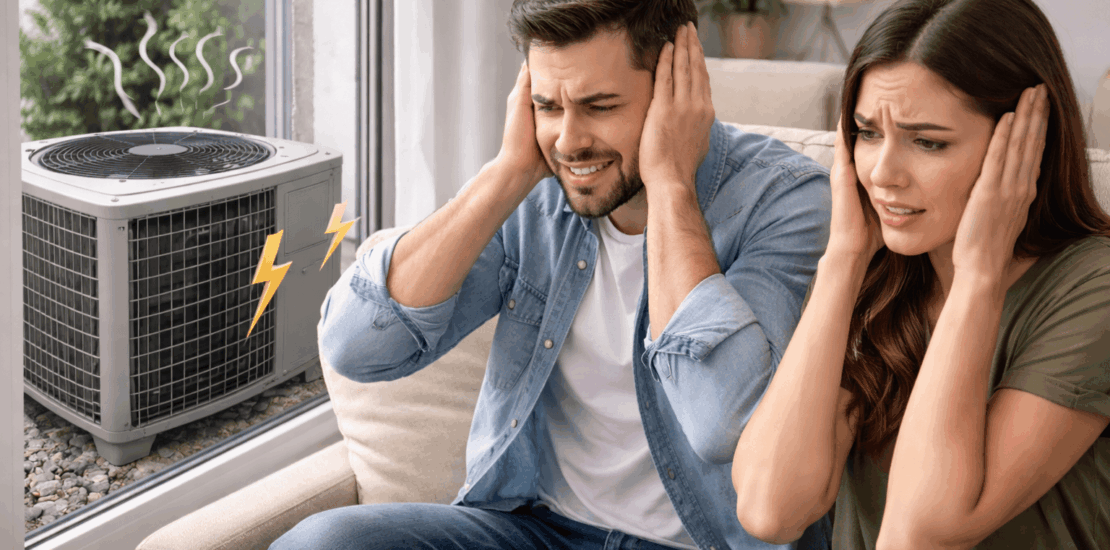
Why is my air conditioner so loud?
Why is my air conditioner so loud?
Some AC noise is normal. Some isn’t. A soft hum, a gentle whoosh of air, and a click when the system starts or stops are normal. Banging, grinding, loud buzzing, or hissing with weak cooling are not. To narrow it down, work out three things: where the noise comes from (outdoor unit, indoor unit, or vents), when it happens (startup, while running, or shutdown), and what it sounds like. The table below matches the sound to the cause.
Normal Sounds
- A soft hum while the system runs
- A whoosh of air through the vents
- A click when the AC starts or stops
- A brief hiss at startup or shutdown
- Popping or cracking in the ducts as they heat and cool
Turn It Off and Call a Technician If You Hear
- Loud banging or clanking
- Metal-on-metal grinding or scraping
- Buzzing along with a tripping breaker or a burning smell
- Hissing together with weak cooling or ice
- Smoke (smoke from AC) or a gas smell. For gas, leave the house and call your gas utility.
Running the AC while it makes these noises can turn a small repair into a big one.
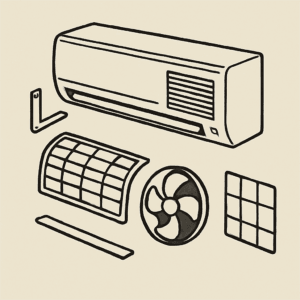
What Each Sound Means
| Sound | Likely cause | Urgency |
| Soft hum, whoosh, click at start/stop | Normal operation | None |
| Popping or cracking as it starts or stops | Ducts expanding and contracting | Usually normal |
| Rattling | Loose panel or screw, or debris in the unit | Low. Fix with the power off |
| Banging or clanking | Loose or broken fan blade, unbalanced blower, or a compressor problem | Stop now |
| Grinding or scraping | Worn motor bearings or a blade rubbing | Stop now |
| Squealing or screeching | Failing motor bearings. On older belt-driven blowers, a worn belt. | Call soon |
| Buzzing or humming, and the unit won’t start | Failing capacitor or contactor. See outside unit not turning on and outdoor fan not spinning. | Call soon. Don’t keep restarting it. |
| Constant loud buzzing | Electrical fault | Stop now if with burning smell or tripping breaker |
| Buzzing that repeats every few minutes | See AC buzzes every few minutes | Call soon |
| Hissing, brief at startup or shutdown | Normal pressure change | None |
| Hissing, constant, with weak cooling or ice | Refrigerant leak. See AC freezing up. | Call soon |
| Whistling | Leaky ducts, a clogged filter, or a restricted return | Low. Check the filter first |
| Loud clunk or hum when it starts | Hard-starting motor or failing capacitor | Call soon |
Most modern systems are direct-drive and have no blower belt. That’s why a squeal today is usually a motor bearing, not a belt.
Where Is It Coming From?
- Outdoor unit: fan, compressor, loose panels, or debris. See why the outdoor unit is loud.
- Indoor unit (closet, attic, or basement): blower motor, filter, or loose parts.
- Vents and ducts: whistling, popping, or rushing air.
- Window or portable unit: these are louder by design. Rattles usually come from loose mounting or a loose panel.
- Heating season: for furnace noises, see furnace clicking noises.
What You Can Safely Check (Power Off First)
- Tighten loose screws and panels.
- Clear leaves, sticks, and debris from the outdoor unit and its fan.
- Replace a dirty filter (how often to replace it) and open every vent.
- Check that the outdoor unit sits level.
Leave the electrical compartment alone. A failing capacitor can hold a dangerous charge even with the power off. A noise that points to the compressor is a technician’s call: see how to tell if your compressor is bad.
Making a Normal-but-Loud AC Quieter
If the noise is normal but annoying, these help without hurting the unit:
- Rubber anti-vibration pads under the outdoor unit cut humming and vibration through the ground.
- A compressor sound blanket, only one approved for your unit. Covering the compressor can raise its operating temperature.
- A sound barrier or fence only if it keeps airflow clear. Keep at least 12 to 24 inches of space around the unit, and never cover the top, where air exits.
- Keep the unit clean and level. Debris and a tilted base both add noise.
- Consider a quieter model if the unit is old. Compare the sound ratings (in decibels) when you shop. See how long central AC lasts.
- Don’t wrap or cover the unit. Blocking airflow can overheat the system, cut efficiency, and shorten its life.
Preventing Noise
- Replace the air filter on schedule
- Keep the area around the outdoor unit clear
- Schedule an annual tune-up before cooling season, which includes tightening connections and checking motors (how often to service your HVAC)
- Don’t ignore a new sound. A noise that wasn’t there last summer is worth checking.
When to Call a Professional
- Any “stop now” noise above
- The noise continues after the basic checks
- Buzzing or humming and the unit won’t start
- Noise comes with weak cooling, ice, or a rise in your energy bill
If you’re in the Philadelphia area and your AC has started making a noise you can’t place, Cool Aid Co. can find out what it is.