
How to Tell If You Have a Heat Pump?
How to Tell If You Have a Heat Pump?
Are you wondering what kind of heating and cooling system your home has? You might have a heat pump and not even realize it. Many homeowners don’t know what a heat pump is or whether they have one. This guide will help you know heat pumps and show you exactly how to tell if you have a heat pump. It’s easier than you think!
What Is a Heat Pump?
A heat pump is a system that both heats and cools your home. It’s like having two machines in one. In summer, it cools your home like an air conditioner. In winter, it heats your home like a furnace. You don’t need separate systems—one heat pump does both jobs.
How Heat Pumps Work: The Physics
The really cool thing about a heat pump is how it works. Instead of creating heat (like a furnace does by burning fuel), a heat pump moves heat from one place to another using the refrigeration cycle. Think of it like this:
- In summer: It takes heat from inside your home and moves it outside. This cools your home down.
- In winter: It takes heat from the outside air (yes, even cold air has some heat!) and moves it inside. This warms your home up.
Heat pumps are a go-to choice because they make more efficient use of energy. Heat pumps are effectively used in a moderately cold climate, but newer types called cold climate heat pumps work even in very cold climates.
Modern Efficiency Ratings:
- SEER2 (Seasonal Energy Efficiency Rating 2): It is a measure of cooling efficiency, with a minimum DOE requirement of 14.3 SEER2 nationally.
- HSPF2 (Heating Seasonal Performance Factor 2): It refers to the heating efficiency of heating pumps. The minimum requirement that the DOE states is an HSPF2 rating of 7.5 for split-system residential heat pumps.
The Department of Energy states that heat pumps are approximately 50% more energy efficient than electric furnaces.
Why Would You Have a Heat Pump?
There are several reasons why a home might have a heat pump instead of a traditional furnace and air conditioner:
Reason 1: Energy Efficiency
Heat pumps consume less energy than traditional heating and cooling systems. People are opting for them because of lower energy costs.
Reason 2: Money Incentives
Many states and local governments offer rebates or tax credits to people who install heat pumps. This makes them more affordable upfront.
Reason 3: No Gas Line Needed
Heat pumps run on electricity, so you don’t need a gas line to your home. This is convenient for people whose homes don’t have natural gas available.
Reason 4: Environmental Reasons
Heat pumps produce fewer emissions than furnaces that burn gas. People who care about the environment often choose heat pumps.
Residential heat pumps reduce CO₂ emissions by 38-53% over gas furnaces, according to population-weighted U.S. averages.
Ways to Know If You Have a Heat Pump
Still asking, “How do I know if I have a heat pump“? Here are several ways to find out:
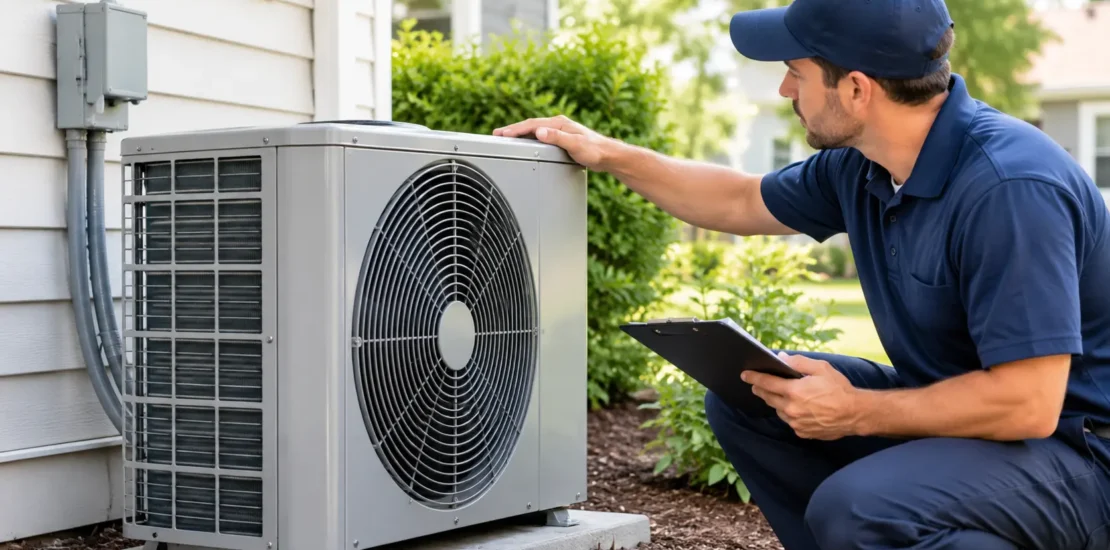
1. Look at Your Outdoor Unit
What to do:
- Go outside and locate the large box-like unit attached to your home
- This is your outdoor HVAC equipment
- Look carefully at the label or nameplate on the outdoor unit
What to look for:
- If the label says “Heat Pump,” you have a heat pump
- If it says “Air Conditioner” or “AC Unit,” you have a traditional air conditioner (not a heat pump)
Common heat pump manufacturers: Lennox, Trane, Carrier, York, Rheem, Coleman, Payne, Goodman
Why this works: Manufacturers clearly label their equipment according to AHRI (Air-Conditioning, Heating, and Refrigeration Institute) standards. The label must identify the equipment type for warranty and service purposes.
Also read: how long do heat pumps last
2. Check Inside Your Home
Most likely, you don’t have a furnace if you have a heat pump. You will, however, have a device that looks like a rectangular box known as an air handler or indoor coil unit. It’s often installed in your basement, attic, or utility closet.
Identification checklist:
- No furnace with a burner: If you do not see a large furnace with a burner (the part that burns fuel), this suggests you have a heat pump
- Presence of air handler: A rectangular metal box (typically 20-48 inches tall, 2-4 feet wide) containing the indoor evaporator coil
- No pilot light or ignition system: Heat pumps have no gas ignition or pilot light
- Refrigerant lines: Copper lines running between indoor and outdoor units (indicates refrigeration-based system)
Visual comparison:
- Furnace (uses fuel): A large boxy unit, often with a ductwork connector, may show gas lines or flue pipe
- Air handler (heat pump): Sleek rectangular unit, always has refrigerant lines, connects to ductwork
3. Look at Your Documentation
Check your paperwork for definitive answers:
- Home inspection report (if you bought the home recently)
- Warranty papers or documentation from when the system was installed
- Homeowner’s insurance papers
- Utility bills or HVAC service records
- Original HVAC quote or invoice
Any of these documents might explicitly mention whether you have a “heat pump” or a traditional “air conditioner” and “furnace” system.
4. Check Your Thermostat
Check the thermostat on your wall. Find the mode settings. If your thermostat has the options “Cool,” “Heat,” and “Auto” and you do not have a separate gas furnace, you most likely have a heat pump. With heat pump thermostats, you can usually switch between heating and cooling.
Some heat pump thermostats also show “Emergency Heat” or “Auxiliary Heat” as an option. This is a backup heating source that only kicks in during very cold weather. The presence of this option usually means you have a heat pump.
5. Listen to Your System
Turn your system on and listen carefully to the outdoor unit. Heat pumps sound different from air conditioners. You might hear:
- A sound like the unit is reversing or changing direction—this is the heat pump switching between heating and cooling modes
- Occasional clicking sounds as the system cycles
- A fan running all the time (even in winter), which is different from a furnace that only runs the fan sometimes
Traditional air conditioners and furnaces sound different. If you’ve moved recently or never paid attention before, this might be hard to judge. But if you hear the unit switching modes and running continuously, that’s a good sign of a heat pump.
6. Look at Your Energy Bills
Heat pumps run on electricity and don’t use natural gas. So if you have a heat pump, you should see:
- One utility bill from the electric company for all your heating and cooling
- No natural gas bill, or a very small one (only for cooking or water heating)
If you have separate electric and gas bills with both increasing in winter, you probably have a traditional furnace and air conditioner, not a heat pump.
Heat Pump vs. Traditional Heating and Cooling
Here’s a quick comparison to help you understand the difference:
| Feature | Heat Pump | Furnace + AC |
| How it heats | Moves heat from outside to inside | Burns fuel or uses electricity to create heat |
| How it cools | Moves heat from inside to outside | Uses an AC unit to remove heat. |
| Uses gas? | No, electricity only. | Usually yes (the furnace uses gas). |
| Energy use | Very efficient | Less efficient |
| Number of units | One unit does both. | Two separate units |
| Best for | Mild to moderate climates | All climates, especially very cold |
Performance Signs You Have a Heat Pump
Beyond looking at your equipment, you can also tell by how your system behaves:
Sign 1: One Outdoor Unit Handles Both Heating and Cooling
If you switch your thermostat from “cool” in summer to “heat” in winter, and in both cases a single outdoor unit handles the whole job, you have a heat pump.
Sign 2: Gradual Heating in Cold Weather
Heat pumps warm your home more slowly than furnaces. Instead of blasting hot air all at once, they provide steady, consistent warmth. This is normal and actually one reason they’re energy-efficient.
Sign 3: Air Temperature in Heating Mode
Even in heating mode, a heat pump’s air might not feel as hot as a furnace’s air. That’s okay—the heat is still there, just delivered more efficiently.
Sign 4: Only One Outdoor Unit
If you look outside and only see one large box-shaped unit (not counting a separate outdoor furnace or unit), you probably have a heat pump. Homes with traditional systems have two outdoor units for heating and cooling.
Quick Checklist: Do You Have a Heat Pump?
Use this simple checklist to determine if you have a heat pump:
| Question | Yes | No |
| Does the outdoor unit’s label say “Heat Pump”? | ✓ | ✗ |
| Do I see a furnace with a burner inside my home? | ✗ | ✓ |
| Does my thermostat show an “Emergency Heat” option? | ✓ | ✗ |
| Do I have only one outdoor unit? | ✓ | ✗ |
| Is my heating and cooling on one utility bill (electricity only)? | ✓ | ✗ |
| Does my documentation mention a “heat pump”? | ✓ | ✗ |
How Professionals Can Help?
Still not sure what type of system you have? That’s okay. Many homeowners aren’t certain about their HVAC systems. Professionals can help you figure it out and answer any questions you have.
What Professionals Can Do For You
- Identify your system—We’ll tell you exactly what type of heating and cooling system you have
- Explain how it works—We’ll describe your system in simple language so you understand it
- Maintenance advice—We’ll tell you what maintenance your specific system needs
- Upgrade options—If you want to consider a different system, we can discuss your options
- Repair services—If your system isn’t working right, we can fix it no matter what type it is
Final Thoughts
Knowing whether you have a heat pump is important for understanding your home’s heating and cooling system. Whether you have a heat pump or a traditional furnace and air conditioner, both systems are designed to keep your home comfortable year-round.
The simplest method to confirm is to inspect the tag on your outdoor unit that is labelled as “Heat Pump.” If you are still unsure, do not worry. Give COOL-AID CO. a call. Our team can come to your house, look at your system, and answer your questions.
No matter what you need, whether it be identification, maintenance, repairs, or questions, we can help! Contact us or visit the website to set up your appointment. We’ll make sure your home remains comfy all year round.