
How to Find Your Furnace Exhaust Vent
How to Find Your Furnace Exhaust Vent
Your furnace is crucial for keeping your home comfortable in the cold. However, many homeowners are unaware of a crucial component: the furnace exhaust vent. Are you wondering, “where is my furnace exhaust vent?” or looking for more information about your heating system? You have come to the right place. This guide will give information on how to find furnace exhaust vent and why it matters for your home’s safety and efficiency.
What Is My Furnace Exhaust Vent?
Understanding the Basics
A furnace exhaust vent is a crucial part of your home’s heating system that safely removes combustion byproducts and gases produced during the heating process. When your furnace burns fuel (whether gas, oil, or other materials), it generates heat—but it also produces exhaust gases that need to be safely vented outside your home.
The Furnace Exhaust Pipe Explained
The furnace exhaust pipe, also known as the flue vent or duct, is the channel through which these gases exit your home. These are the main characteristics:
- Material: Nowadays, most of the exhaust pipes of the furnace are made of PVC or metal.
- Diameter: The diameter ranges from two to six inches depending on the size of the furnace.
- Route: Extends from your furnace to the exterior of your home, often through a wall or roof
- Appearance: May look like a white PVC pipe, aluminum, or metal ducting
Why Is It Important?
Gaining knowledge about your furnace exhaust vent system is crucial for a number of reasons:
- Safety: Proper venting prevents dangerous carbon monoxide from accumulating in your home. Carbon monoxide poisoning from fuel-burning appliances kills more than 200 people each year and sends approximately 10,000 to hospital emergency rooms for treatment, according to the U.S. Consumer Product Safety Commission (CPSC).
- Efficiency: If your vent is clear, your furnace will run efficiently.
- Maintenance: Checking it frequently helps you identify problems.
- Longevity: Proper functioning extends your furnace’s lifespan
How to Find Furnace Exhaust Vent: A Step-by-Step Guide
Step 1: Find The Furnace
In order to locate the furnace exhaust vent, you will need to locate your furnace first, which you can find at:
- Basement: Most homes that have a basement will have the furnace located in the basement.
- Attic: Sometimes put in attic spaces
- Utility closet: Often found in smaller homes.
- Garage: Less common, but possible in some homes
- Crawl space: Occasionally installed in accessible crawl spaces
Take time to explore these areas systematically. Your furnace is a large metal box with visible ductwork, and it should be labelled.
Step 2: Look for the Vent Pipe at the Furnace
Once you’ve found your furnace:
- Examine the top or back of the furnace unit carefully
- Look for a pipe extending upward or outward from the furnace
- The furnace exhaust pipe will be noticeably separated from the cold air return ductwork
- Check for any labels or markings on the furnace that indicate vent location
- Modern furnaces often have white PVC pipes, while older models may have metal ducting
Step 3: Follow the Furnace Exhaust Pipe to the Exit
After identifying the vent at the furnace:
- Trace the furnace exhaust pipe as it travels through your home
- Note any bends, elbows, or joints in the piping
- Watch where it exits your home—this is critical for inspections
- Document the exit location (roof, wall, or foundation)
- Take photos for your records if helpful
Step 4: Check the Exterior Exit Point
The exterior inspection is crucial to know the location of your furnace exhaust vent:
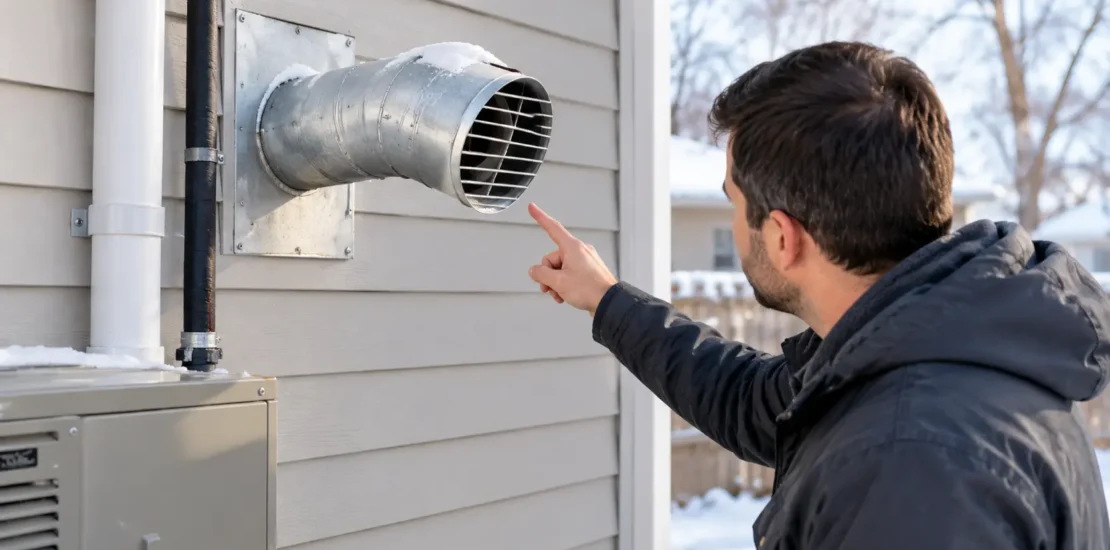
- Roof vent: Look at your roof for a white PVC pipe or metal vent extending through the roofline
- Wall vent: Check the outside of exterior walls for vent openings, which can be at ground level.
- Foundation vent: Some vents exit through basement or foundation walls
The exterior exit should be clearly visible and easily inspected seasonally.
Step 5: Identify Potential Issues
When you are tracing your furnace exhaust vent, look for:
- Blockages: Ice, debris or nesting material build-up.
- Corrosion: Wearing or deterioration of pipes through corrosion.
- Damage: Holes, cracks, or disconnections.
- Improper slope: Vents should slope slightly downward to prevent moisture accumulation
- Separation: Any disconnected joints or gaps in the piping
Visual Inspection Checklist
Use this checklist when locating and inspecting your furnace exhaust vent:
Interior Inspection
- Furnace unit located and identified
- The vent pipe can be seen at the exit of the furnace.
- Pipe looks undamaged and secure.
- No strange smells identified.
- A clear route from furnace to exit
- Insulation intact around pipe (if relevant).
Exterior Inspection
- Vent exit is visible and accessible
- No ice, snow, or debris blocking the vent
- Vent cap is intact and functioning
- Proper clearances maintained (per local codes)
- No signs of deterioration or corrosion
- No animal activity or nesting materials
Common Mistakes When Looking for Furnace Exhaust Vent
Avoid these errors:
- Confusing it with the cold air return: Don’t confuse the cold air intake with the cold air return vent.
- Ignoring the entire path: Only checking the furnace without following the complete vent route
- Missing exterior components: Neglecting the vent cap or outside termination point is a red flag.
- Assuming all vents are the same: Different furnace types have different exhaust configurations
- Neglecting seasonal changes: Failing to check for blockages in winter months
- Ignoring warning signs: Not taking action on visible corrosion or damage
Furnace Exhaust Pipe Types
PVC Pipes
Modern furnaces typically use white PVC pipes for exhaust venting. These are:
- Lightweight and easy to install
- Resistant to corrosion
- Affordable
- Commonly found in high-efficiency furnaces
Metal Pipes
Older furnaces may have metal exhaust pipes, which are:
- Durable and long-lasting
- More prone to corrosion
- Heavier and more difficult to install
- Still functional but may need maintenance from time to time
Double-Wall Pipes
Some furnaces use insulated double-wall pipes for improved efficiency and safety.
Maintenance Tips for Your Furnace Exhaust Vent
Follow these maintenance tips after you have found the location of your furnace exhaust vent:
- Regular inspections: Check your vent once a quarter to maintain it and check for damage.
- Clear debris: Remove any leaves, nests, or obstructions
- Monitor for ice: During the winter, please monitor for any ice build-up around the vent exit.
- Professional service: Have a licensed technician visit annually for professional maintenance service.
- Document location: Keep records of your vent location for reference
- Check seasonally: Inspect on a seasonal basis before heating season begins
- Ensure proper clearances: Keep the area around exterior vents clear
When to Call a Professional
While locating your furnace exhaust pipe is straightforward, contact a professional HVAC technician if:
- You’re unable to find your furnace or its vent.
- The vent looks to be broken.
- A blockage or problem is suspected.
- Your furnace isn’t running properly.
- You detect gas or other odors
- You have symptoms of carbon monoxide poisoning such as headache, fatigue, shortness of breath, nausea and dizziness.
- You require fixing or upkeep (necessary as per CPSC directives and guidelines).
- Water is leaking around the vent exit
- The vent pipe has visible corrosion or separation
Conclusion
As a responsible homeowner, it’s good to know where your furnace exhaust vent is and what it does. By following the steps in this guide, you should feel confident in locating your furnace exhaust pipe, checking it visually, and knowing when maintenance is needed.
Your home’s furnace exhaust vent isn’t just any old pipe – it’s one of the most important safety devices in your house, protecting your family and maintaining peak efficiency for your heating system. Your home will be both safer and more comfortable when you take note of this part.
When you’re experiencing issues with your furnace exhaust vent, it’s best that you reach out to a qualified HVAC technician in your area. COOL-AID CO. is at the service to keep your heating system running all year round. Make sure your furnace is running safely and efficiently. Contact COOL-AID CO. today for furnace inspection and maintenance service. We care about your comfort and safety!