
Why Does My AC Keep Freezing Up? – Causes & Quick Fix
Why Does My AC Keep Freezing Up?
An air conditioner is a lifesaver during hot weather. But what happens when it starts freezing up?
A frozen air conditioner can be frustrating and inconvenient. It can also lead to higher energy bills and reduced cooling efficiency.
Understanding why your AC unit keeps freezing up is crucial. It helps in preventing long-term damage and maintaining comfort in your home.
Several factors can cause an AC unit to freeze. These include low refrigerant levels, dirty air filters, and blocked vents.
In this guide, we’ll explore common reasons for a frozen AC unit. We’ll also provide practical solutions and maintenance tips to keep your air conditioner running smoothly.
What Causes An AC Unit to Freeze Up?
If you’ve ever asked yourself “why is my AC unit freezing up?” you’re not alone. Air conditioners can ice over for several reasons, and ignoring the issue can lead to bigger problems down the road. Here are the most common causes:
1. Restricted Airflow
Poor airflow is one of the top answers to “what causes an AC unit to freeze up?” When warm air can’t properly move across the evaporator coil, the coil becomes too cold and eventually ices over. This usually happens because of:
- Dirty or clogged air filters
- Blocked supply or return vents
- Obstructed ductwork
A quick fix for AC freezing up due to airflow issues is as simple as replacing your filter or making sure vents aren’t blocked by furniture.
2. Low Refrigerant Levels or Leaks
If refrigerant levels drop, the pressure in your AC system also decreases. This causes the evaporator coil to get too cold, which is what causes the air conditioner to freeze up in many cases. Low refrigerant usually means there’s a leak, and this is not something you can fix on your own. A professional technician should inspect, repair, and recharge the system.
3. Faulty Thermostat or Temperature Settings
Sometimes the thermostat is the problem. If it does not read the room temperature properly or a very low set, the system can last longer than necessary, which can eventually cause the coil to freeze. Checking your thermostat settings is one of the simplest ways to find out how to tell if AC is frozen.
4. Evaporator Coil Issues
The coil of a dirty or damaged evaporator prevents heat transfer and reduces efficiency, and makes snow. Even if you try to find out how to unfreeze my air conditioner, cleaning the evaporation core will be a long-term solution to prevent the problem from returning..
5. Blower Motor Problems
Your blower motor is responsible for pushing the air through the coil. If it fails or moves at the wrong speed, the airflow is limited and causes ice. Since this problem requires technical expertise, you need a professional hvac expert to repair it.
6. Outdoor Temperature Conditions
When external temperatures fall very low, especially at night, freezing it can occur. Air conditioning is not designed to function effectively under cooler conditions, so it is best to avoid running when the external temperature drops significantly.
Signs of a Frozen Air Conditioner
Identifying a frozen air conditioner early can save you from bigger problems. Recognizing the signs allows for quick intervention.
One obvious sign is a noticeable drop in cooling efficiency. You may also experience uneven cooling throughout your home.
Another sign is unusual noises coming from the AC unit. These noises could indicate that ice is affecting the moving parts.
Here’s a list of signs to watch for:
- Decreased cooling power
- Uneven temperatures in different rooms
- Strange noises from the AC unit
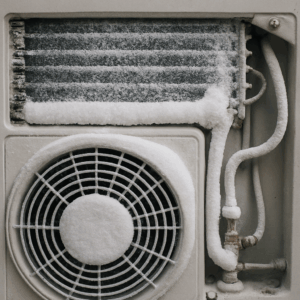
- Visible ice on refrigerant lines or evaporator coil
- Water leaking from the unit
If you notice any of these signs, it’s crucial to address them immediately. Early detection can prevent further damage and costly repairs. Understanding these symptoms equips you to act swiftly.
Quick Fix for AC Freezing Up at Home
If you’ve ever wondered, “Why is my AC unit freezing up?”, you’re not alone. An air conditioner freezing up is one of the most common issues homeowners face during peak summer. The good news is, in many cases, you don’t need to panic. Let’s break down what causes an AC unit to freeze up and some quick fixes you can try at home before calling a technician.
1. Turn Off Your AC
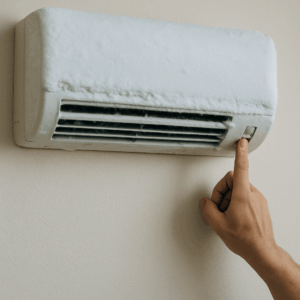
When you first notice ice forming, turn off your air conditioner immediately. Running a frozen system can strain the compressor and worsen the damage. This step is the quickest way to prevent further issues while you figure out how to tell if your AC is frozen and what to do next.
2. Let the Ice Melt
If you’re asking, “How do I unfreeze my air conditioner?”, the answer is simple: give it time. Allow the ice on the coils to melt naturally. Depending on the severity, this could take a few hours. Switching your thermostat fan to “ON” (without cooling) helps blow warm air across the coils and speeds up the thawing process.
3. Check the Air Filter
A clogged air filter often occurs, which causes an air conditioner to freeze up. The limited airflow prevents warm air from reaching the coil, which then becomes very cold and freezes. Pull out the filter and inspect it. If it looks dusty or closed, you can change it immediately. Sometimes this simple step is the only quick fix for the freezing up that you need.
4. Inspect Vents and Registers
Bad airflow not only comes with filters, but it can also occur if the ventilation or register is blocked. Go through your home and make sure they are completely open and free of barriers such as blankets, furniture, or curtains. It helps to transfer the air properly and reduces the possibility of producing ice.
5. Reset the Thermostat
Setting the thermostat too low is another reason why your AC device keeps cold. Keeping the temperature extremely low forces an overcoat of the coil, which can cause ice. Instead, set your thermostat to a medium setting, around 24–26°C (75–78°F). It keeps your home comfortable without overworking AC.
6. Check Drainage
Blocked drainage lines are often ignored, but are a common criminal behind the cold. If the water cannot be tapped properly, it can return around the coil and freeze. Check the Condensate Bar for clogs. If you notice water-based, use a wet/dry vacuum or pipe cleaner to clean it. Proper drainage is important for preventing what causes an AC unit to freeze up repeatedly.
Why Is My Brand New AC Unit Freezing Up?
It can be frustrating when your new AC unit starts freezing. The causes might seem puzzling, but several reasons are common. Even new units can have installation issues or defects.
Incorrect installation often leads to problems like poor refrigerant flow. This misstep results in the unit icing over. Moreover, faults in factory settings might cause the system to malfunction.
Even a brand new AC can experience airflow blockages. For instance, debris in vents or filters can cause these problems. This often leads to frozen components.
Here are possible causes for a new unit freezing:
- Incorrect installation leading to inefficiency.
- Factory defects affecting performance.
- Airflow issues due to blockages.
Consult with the installer if your new AC freezes. A professional assessment often resolves these early issues efficiently.
AC Maintenance Tips to Prevent Freezing
Regular maintenance is key to preventing your AC unit from freezing. Simple actions, when done consistently, can make a big difference. These easy steps help ensure your unit runs smoothly throughout the year.
Firstly, change your air filters monthly. Clogged filters restrict airflow, leading to frozen coils. Clean air filters not only improve efficiency but also enhance indoor air quality.
Secondly, check the refrigerant levels regularly. Low refrigerant can cause the evaporator coil to freeze. A professional should inspect and refill refrigerant levels to ensure optimal performance.
Additionally, keep your vents open and unobstructed. Closed vents can cause pressure imbalance and decrease performance. Make sure furniture or drapes aren’t blocking the vents.
Here are some maintenance tips to prevent freezing:
- Change air filters every month.
- Inspect refrigerant levels regularly.
- Ensure vents are clear and open.
Finally, schedule routine professional maintenance, especially before peak seasons. Technicians can identify and address issues before they lead to freezing. A little attention now can save on repairs and ensure comfort later.
When to Call a Professional
There are times when DIY efforts aren’t enough to fix a frozen AC unit. If your unit continues to freeze despite regular maintenance, it might be time to seek professional help. Professionals have the tools and expertise to diagnose complex issues and provide lasting solutions.
Call a technician if you notice these issues:
- Persistent freezing despite DIY efforts.
- Unusual noises or odors from the unit.
- Significant drops in cooling efficiency.
Professional intervention can prevent further damage and ensure your AC unit runs efficiently. Ignoring persistent freezing can lead to expensive repairs down the line. When in doubt, a professional can offer peace of mind and a comfortable home environment.
Final Thoughts
An air conditioner freezing up is a clear sign that something isn’t working as it should, whether it’s restricted airflow, a clogged filter, blocked vents, or even low refrigerant. While a quick fix for AC freezing up can often solve minor issues, repeated freezing usually points to a bigger problem. If freezing isn’t actually your issue and the system is just struggling to cool overall, see our AC struggling to cool guide for other possible causes.If you’re still wondering what causes an air conditioner to freeze up after trying basic steps, it’s best to call a air conditioner repair technician. Taking action early not only helps you unfreeze your air conditioner but also protects your system from long-term damage and keeps your home cool and comfortable.
FAQs
1. How do I unfreeze my air conditioner?
To unfreeze your AC, you can start by turning it off and letting the ice melt naturally. It can take a few hours. Replacing the thermostat fan to “ON” can help blast warm air on the coil and provide speed to the clamping process. While waiting, check and replace dirty filters or remove blocked ventilation openings to restore the airflow.
2. How to tell if AC is frozen?
There are indications that AC is frozen, the ice begins to melt as visible ice on the indoor unit or cold lines, weak or hot airflow from the ventilation, unusual hissing sounds, or water leaks. If you notice these symptoms, AC is likely to be frozen and must be noted.
3. What to do if my AC is frozen?
If your AC is frozen, shut it off to prevent further stress on the first system. Melt the ice completely, inspect the air filter, make sure the ventilation openings are open, and check the clogged drainage. If it is cold again after these stages, you can call a professional to check problems such as a less cold or an inadequate blower motor.
4. How long does it take for AC to unfreeze?
It takes time to be unfriendly, and how much ice has been produced by snow. In most cases, it can be carried anywhere for 2 to 24 hours. Running (without cooling) the fan helps melt ice faster, but it is important to wait until the coil melts completely before starting the AC again.