Furnace Clicking Noises: What They Mean and When to Worry
A furnace making a clicking noise can be unsettling. It might signal a minor issue or a serious problem. Understanding these noises is crucial for maintaining a safe home environment.
Clicking sounds can occur when the furnace turns on, off, or even while running. Each scenario might indicate different underlying issues, and homeowners often wonder why is my furnace making noise or why does my heater make so much noise during normal operation.
Common causes include ignition system problems, loose components, or blower motor issues. These issues may explain situations such as a furnace clicking noise, a heater clicking noise, or even a furnace ticking noise heard during startup.
Regular maintenance can prevent many of these noise-related problems. Ignoring these sounds can lead to more significant damage or safety hazards, especially when a furnace keeps clicking on and off or a heater making noise when turned on becomes more frequent.
This guide will help you troubleshoot and understand your furnace’s clicking noise, ensuring your home stays warm and safe while also explaining furnace noises and what they mean.
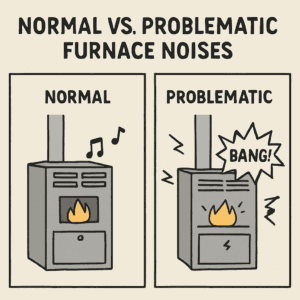
Understanding Normal vs. Problematic Furnace Noises
Furnaces make various noises during operation. Some are perfectly normal, while others hint at issues. Identifying which is which can save you stress and expense.
Normal furnace noises include gentle humming and the whoosh of air through ducts. These sounds indicate the system is functioning correctly and help explain common furnace making sounds during daily use.
Problematic noises, however, often require attention. Homeowners may report:
- Clicking sounds, especially if repetitive
- Loud banging or clunking
- Prolonged whistling or screeching
For example, a furnace makes clunking noise when starting or a furnace banging noise when turning on may point to delayed ignition, while a furnace makes a loud noise when starting could indicate expanding metal or burner issues.
Knowing what each sound means helps you take necessary actions. Persistent sounds like a furnace making weird noise or gas heater making noise should never be ignored.
Pinpointing the Source: Furnace vs. Ductwork Clicking
Before jumping to conclusions—or picking up the phone for emergency repairs—take a moment to locate where the clicking noise originates. This quick step can provide clarity and save unnecessary worry.
Walk around your home and listen carefully:
- If the clicking sound is concentrated near the furnace itself, especially when it starts or shuts down, it’s likely an issue within the furnace.
- If you hear clicking in multiple rooms, especially far from the furnace, the culprit may be somewhere in the ductwork—perhaps a loose connection or shifting metal as ducts expand and contract.
Even if it’s a ductwork issue, it still deserves professional attention, but it’s often less urgent than a direct furnace problem. Taking a moment to distinguish the source can help you communicate the issue more clearly to your technician and avoid unnecessary interruptions to your home’s comfort.
Common Causes of a Furnace Making Clicking Noise
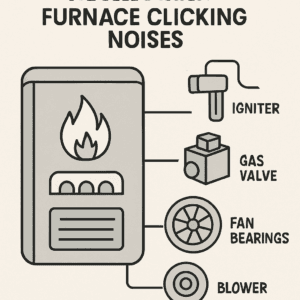
A clicking noise in your furnace can originate from several sources. Identifying the root cause is the first step in resolving the issue.
Ignition system problems can cause a furnace to make clicking noises during startup, especially when safety components fail to engage properly. In many cases, this is related to airflow or venting issues, such as a pressure switch stuck open, which prevents the furnace from igniting even though it keeps trying.
Beyond airflow concerns, most newer furnaces rely on electronic ignition systems that use electricity to ignite the gas. Over time, the igniter itself can wear out, leading to periodic failures to light the burner. When this happens, you might hear repeated clicking as the system continually attempts to ignite the gas—these clicks may continue until the flame successfully lights or the gas valve shuts off.
Other possible culprits include loose wiring to the igniter or dirt buildup on either the igniter or burner. In these cases, the igniter may not receive enough power or the burner may not get enough gas, causing the igniter to keep clicking in an effort to ignite a weak or incomplete flame.
This is often why homeowners ask, why is my furnace clicking or why does my heater make a clicking noise.
Loose components are another frequent cause. Panels or screws can vibrate, leading to a clicking sound from furnace or even a furnace rattling, which explains why is my furnace rattling during operation.
Blower motor issues may also be responsible, particularly if you notice a furnace makes loud noise when turning on, a furnace making loud noise when starting, or a furnace squealing noise when starting.
Other common causes include:
- Faulty ignition system components
- Loose parts or panels
- Blower motor issues
- Expanding ductwork as it heats
- A gas furnace popping noise on startup
Left unresolved, these problems can worsen and lead to situations where a furnace sounds like it’s trying to start but never fully ignites.
Faulty or Dirty Flame Sensor
A faulty or dirty flame sensor is another classic culprit behind a persistent clicking sound from your furnace. The flame sensor’s main job is to confirm that the gas is actually igniting. When it fails to detect a flame—often because it’s coated with dirt or debris—it tells the system to shut off the gas as a safety precaution.
Here’s how this leads to that telltale clicking:
- The ignition process begins and the igniter creates a spark.
- If the flame sensor can’t “see” the flame because it’s dirty or malfunctioning, it keeps signaling the system to reignite.
- Each attempt to ignite produces another click, setting off a repetitive clicking noise.
If left unchecked, your furnace may repeatedly attempt to start up and shut down, never fully igniting, and the clicking will continue. The good news? Routine professional maintenance—especially an annual cleaning and inspection—can keep that flame sensor in top form and help you avoid this noisy hassle.
The Role of the Flame Sensor in Furnace Operation and Clicking Noises
The flame sensor acts as a safety checkpoint inside your furnace. Its main task is to confirm that the burners have successfully ignited when your system calls for heat. If everything is working smoothly, the flame sensor detects the flame and allows the furnace to run normally.
However, if the sensor doesn’t “see” the flame—even when ignition happens—it will cut off the gas supply as a safety measure. This process often repeats several times in an attempt to ignite, resulting in a series of clicking sounds that can make you wonder, why does my furnace keep clicking but not starting?
A dirty or faulty flame sensor is a common culprit behind this issue. Over time, soot or buildup can coat the sensor, interfering with its ability to detect a flame. When that happens, the furnace keeps trying to ignite, producing repeated clicking noises.
The good news? Routine annual maintenance, like cleaning the flame sensor, typically heads off this problem before it starts. If you notice persistent clicking and failed starts, it may be time for a professional tune-up to keep your heating system both safe and quiet.
Worn-Out Fan Bearings and Their Role in Furnace Noises
Fan bearings are crucial for the smooth operation of your furnace’s blower motor. When these bearings begin to fail, it’s not just performance that’s affected; your ears will know about it, too.
Early warning signs that the fan bearings are in trouble often include a rhythmic clicking, squealing, or even humming noise as the blower attempts to start. This occurs because worn bearings cause the blower fan to wobble or struggle as it spins, leading to those odd sounds you may notice when your furnace kicks on.
If ignored, deteriorating bearings can strain the blower motor, potentially resulting in more significant failures and far higher repair costs. Addressing noisy bearings early by having them inspected and replaced when necessary helps prevent both irritating furnace noises and bigger issues down the line.
Damaged or Broken Fan Blades: Noises and Risks
Fan blade problems can become a major source of furnace noise and trouble if left unchecked. When the fan blades become bent, cracked, or broken, they may hit against nearby components with every rotation, producing persistent clanking, rattling, or grinding sounds. These noises often increase as the fan speeds up, leaving no doubt something is amiss.
Beyond just the racket, broken or damaged fan blades can:
- Cause the entire blower assembly to vibrate or wobble
- Stress or damage the blower motor, leading to premature failure
- Result in uneven airflow and poor heating performance throughout your home
- Scatter debris into other internal furnace parts, worsening wear and tear
If you suspect your furnace’s fan blades are damaged—especially if you hear sudden harsh noises when the system runs—it’s wise to shut down the system and call a professional for an inspection before things escalate. Ignoring damaged fan blades can turn a minor repair into a much bigger problem down the road.
The Role of the Start Capacitor in Furnace Clicking Noises
Among the more technical reasons your furnace may develop a new clicking rhythm is an issue with the start capacitor—a small but essential electrical component. The start capacitor acts a bit like a jump-starter for the furnace’s blower motor, providing the initial jolt of energy required to get the fan spinning when your system powers up.
But when the capacitor wears out or fails, it can’t give the fan the boost it needs. Instead of a smooth start, you’ll often hear a persistent clicking noise as the furnace repeatedly tries and fails to get the blower going. This clicking can be particularly noticeable in electric furnaces, where the absence of combustion eliminates many gas-related noises, making electrical problems like a faulty start capacitor easier to spot.
Attempting to replace a start capacitor is not a recommended DIY adventure. These parts handle a fair bit of stored voltage, and a mistake can be both shocking and unsafe. For your safety—and your furnace’s well-being—leave diagnosis and repairs to a licensed HVAC technician, whether your system is electric or gas-powered. Identifying a problematic capacitor early can head off bigger headaches down the road and restore quiet to your home heating routine.
Clicking Noise When Turning On or Off: What Does It Mean?
When your furnace makes a clicking noise during start-up or shut-down, it may be normal—or it may signal trouble.
Metal expansion can explain a furnace makes loud noise when starting or a furnace making high pitched noise when starting. However, repeated clicking or ticking may result in a heater making ticking noise or a furnace making clicking noise when off, which could indicate electrical or thermostat problems.
If your system is silent and then suddenly begins making noise, you may wonder why is my furnace so loud all of a sudden or why does my heater make noise when nothing seems different.
Possible causes for on/off clicking include:
- Metal expansion
- Malfunctioning thermostat
- Residual heat-related contraction
- Electrical problems
A heater makes clicking noise due to relay switches
Understanding these sounds helps prevent costly breakdowns and answers common concerns like why is my heater clicking or why is my heater making a clicking sound.
Is a Clicking Furnace Dangerous?
A clicking noise from your furnace can sometimes indicate potential hazards. In some cases, homeowners worry, is a clicking furnace dangerous, and the answer depends on the source of the noise. When these warning sounds are ignored, minor ignition or airflow issues can escalate into serious system failures that increase repair frequency and drive up annual furnace maintenance costs over time.
Clicking combined with gas odors may indicate why is my gas heater making noise due to ignition or gas valve problems. Electrical issues may also cause repeated clicking or buzzing.
Sometimes, repeated clicking noises can also point to gas supply problems. If your gas line is clogged, the main gas supply is interrupted, or the gas valve is defective, your furnace’s igniter may keep clicking without ever lighting. If your furnace refuses to start and you don’t hear any gas flow, try starting another gas appliance—like your water heater. If the water heater works but the furnace doesn’t, the problem likely lies with your furnace or its gas supply. If neither appliance works, there may be a larger issue with your home’s gas supply, and you should contact a certified professional immediately.
Persistent clicking sounds—especially when paired with gas odors, a furnace not igniting, or other unusual symptoms—should never be ignored. Addressing these issues promptly can help prevent bigger hazards and costly repairs down the road.
Key issues to monitor include:
- Gas leaks
- Failing ignition systems
- Electrical problems
Any heater making clicking noise paired with burning smells or system shutdowns requires immediate attention.
DIY Troubleshooting Steps for Clicking Noises
If your furnace is making a clicking noise, there are a few safe steps you can take before calling a professional.
Loose screws may cause a furnace clicking, rattling, or ticking sound. Dust buildup and restricted airflow can also contribute to clicking or ticking sounds, especially during startup. If these noises persist despite basic checks, it’s worth reviewing how often you should replace a furnace filter, since clogged filters force the system to strain and cycle improperly.
DIY troubleshooting checklist:
- Turn off power to the furnace
- Tighten any loose screws or panels
- Inspect for visible wear
- Clean dust from the blower and fan
- Restart and listen for furnace noises
If the issue continues—such as a furnace making a clicking noise, repeated startup failures, or persistent airflow problems despite routine filter replacement—it’s time to call an expert.
How to Check for Gas Supply Issues
If clicking continues and your furnace won’t ignite, a gas supply problem could be the culprit. To rule out a gas flow interruption, listen for the sound of gas when the furnace attempts to start—no hiss or odor might mean no gas is reaching your unit. An interrupted supply can stem from a closed or clogged gas line or a malfunctioning gas valve.
An easy at-home test is to check another gas-powered appliance, like your stove or water heater. If those appliances work, the issue likely lies with your furnace’s own supply or internal components. But if none of your gas appliances are operating, you might have a broader issue with your home’s gas service.
Any suspicion of a gas leak or total loss of gas supply warrants immediate action—do not attempt further troubleshooting and contact your gas provider or a certified HVAC technician right away.
When to Call a Professional
Some furnace noises should never be ignored. Persistent clicking, squealing, or banging may indicate serious mechanical issues, and contacting a trusted furnace repair services provider can ensure your system is repaired safely and efficiently.
Call a professional if you notice:
- Repeated clicking after DIY checks
- A furnace makes loud noise when turning on
- Gas smells or electrical sparks
- Older units with worsening noise problems
A technician can diagnose issues related to furnace makes clunking noise when starting or furnace making loud noise when starting safely and accurately.
Furnace Maintenance Tips to Prevent Noises
Routine maintenance reduces unexpected sounds and improves efficiency.
Simple care can prevent:
- Furnace making high pitched noise when starting
- Gas heater making noise
- Furnace clicking noise
Helpful maintenance tips include:
- Annual professional inspections
- Regular filter replacement
- Tightening loose panels
- Lubricating moving parts
Proper upkeep prevents breakdowns and answers ongoing concerns like why is my heater making noise.
Conclusion: Keep Your Furnace Running Quietly and Safely
Furnace noises are your system’s way of communicating. Whether it’s a heater clicking noise, a furnace making sounds, or a furnace sounds like it’s trying to start, understanding the cause helps you act quickly.
By staying proactive with maintenance and professional furnace repair support, you can eliminate unnecessary noise and keep your home safe, efficient, and comfortable year-round.