
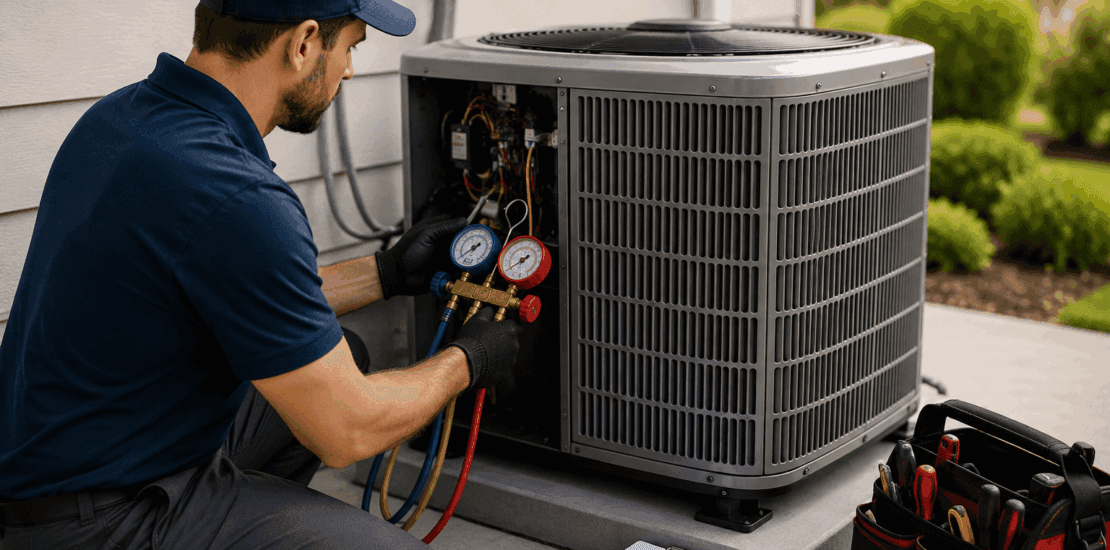
How Often to Service HVAC: Essential Tips for Every Homeowner
How Often to Service HVAC?
Your HVAC system quietly runs in the background every single day — heating your home in winter, cooling it in summer, and filtering the air your family breathes year-round. Most homeowners never think about it until something goes wrong. That is exactly the problem.
The question of how often to service HVAC units is not one-size-fits-all. The answer depends on your system type, how old it is, where you live, and how hard it works. This guide gives you the research-backed answers, practical schedules, and warning signs every homeowner should know.
How Often Should HVAC Be Serviced?
For most homes, twice a year is the professional standard—once in spring before the cooling season and once in fall before the heating season. This pattern aligns with the two biggest demands placed on your system and gives a technician the chance to catch problems before peak usage begins.
| System Type | Recommended Frequency |
| Central AC and Furnace | 2 times a year |
| Heat Pump | 2 times a year |
| Ductless Mini-Split | Once a year |
| Window Unit | Once a year |
According to the U.S. Department of Energy, a well-maintained HVAC system can operate up to 25% more efficiently than a neglected one. That efficiency gap translates directly into your monthly energy bill — and over a 10-year period, the difference between maintained and unmaintained systems can run into thousands of dollars.
Why HVAC Maintenance Matters?
Skipping service visits feels harmless until it is not. Here is what the research actually shows:
- The Air Conditioning Contractors of America (ACCA) reports that up to 75% of no-heat calls in winter are caused by a lack of maintenance — problems that a fall inspection would have caught.
- Studies by HVAC manufacturers consistently show that systems receiving annual professional service last longer than those that do not.
- The EPA estimates that HVAC systems account for nearly half of a home’s total energy consumption. Even a 10% efficiency loss from dirty coils or low refrigerant adds measurably to your annual electricity cost.
- Poor HVAC maintenance is one of the leading causes of poor indoor air quality, which the EPA ranks among the top five environmental health risks facing Americans.
The math is straightforward: a professional service visit typically costs $80 to $150. A compressor replacement costs $1,200 to $2,500. A full system replacement costs $5,000 to $12,000. Maintenance is not an expense — it is insurance.
Also Read: How to repair heating and air conditioning
Understanding HVAC Maintenance: What Happens During a Visit?
HVAC maintenance means checking, cleaning, and adjusting parts of your heating and cooling system. This keeps everything working the way it should.
Importance of Preventative HVAC Maintenance
Avoiding regular checkups can cause inflated energy bills and reduced equipment longevity.
Being a proactive problem-solver is vital:
- Addressing minor problems before they require costly repairs.
- Keeps energy bills lower when it maintains efficiency.
- Helps to increase the overall life of the system.
- Enhances indoor air quality by maintaining cleanliness of the components.
- Minimizes the risk of an unexpected breakdown in severe weather.
A visit typically takes 45 minutes to 90 minutes, depending on system size and age. Let’s deep dive to our core question – How often should you service your HVAC?
Recommended HVAC Maintenance Schedule
Seasonal Checks
Spring (Before Cooling Season):
- Service the AC before the first hot day of the year.
- Systems that sit idle through winter accumulate dust on coils, debris around the outdoor unit, and refrigerant can shift.
- A spring visit ensures the system is ready to handle peak summer demand without struggling from day one.
Summer (During Heavy Use):
- Check and replace air filters monthly during periods of heavy use.
- A clogged filter is the single most common cause of reduced system efficiency and can cause the evaporator coil to freeze—a failure that shuts down cooling entirely.
- Additionally, keep the outdoor condenser unit clear of grass clippings, plant growth, and debris that reduce airflow.
Fall (Before Heating Season):
- Service the furnace or heat pump before the first cold snap. This is when the heat exchanger inspection becomes critical.
- According to the Centers for Disease Control, carbon monoxide poisoning leads over 100,000 Americans to emergency situations each year—and a cracked heat exchanger in a gas furnace is one of the preventable causes.
Winter (Ongoing Monitoring):
- Monitor for unusual noises, uneven heating between rooms, and unexpected spikes in gas or electricity bills.
- These are early warning signs that something is developing inside the system.
- Note them and report them at the next service visit or call a technician sooner if they worsen quickly.
Annual Inspections
Every professional service visit should result in a written record that includes:
- Clean coils and check refrigerant levels
- Inspect electrical connections for wear
- Test thermostat accuracy
- Lubricate moving parts where needed
- Check ductwork for leaks or blockages
Also Read: Air conditioner not blowing cold air but running
How Often Does HVAC Need to Be Serviced?
The general rule is once every six months, but this can shift slightly depending on the system type and household needs.
General Guidelines
- Newer systems may only need one detailed visit a year, plus filter changes
- Older systems often benefit from more frequent checks
- Systems in constant use, such as in rental properties, may need extra visits
- Manufacturer guidelines should always be checked, since some warranties require proof of regular service
Factors That Influence How Often You Should Service Your HVAC
System Age
Older units tend to develop wear and tear faster. This means they often need closer attention.
- Systems under 5 years old: usually fine with standard twice-a-year visits
- Systems 5–10 years old: may need added filter and coil checks
- Systems over 10 years old: often require more frequent inspections to catch aging parts early
Usage Patterns
How much a system runs each day changes how quickly parts wear down.
- Houses that keep their air conditioning and heating on full time need to be examined more often.
- Houses or vacation homes with occasional use of air conditioning need fewer maintenance visits.
- More often, servicing is advised for large families who use it a lot.
Geographic Location
Where you live changes what your system deals with and which components are most at risk.
Also Read: Ac not keeping up with set temperature
| Climate Type | Key Risk | Suggested Adjustment |
| Hot and humid (Southeast US, coastal) | Condensate drain blockages, mould in air handler, oversaturation of filter | More frequent AC checks; consider quarterly filter changes |
| Cold and snowy (Midwest, Northeast) | Heat exchanger stress, frozen pipes near HVAC units, flue blockages from ice | A fall furnace inspection is non-negotiable; check flue clearance after heavy snow |
| Coastal or salty air (within 5 miles of ocean) | Accelerated corrosion on condenser coils and electrical components | Annual coil coating treatment: inspect for rust every visit |
| Dry and dusty (Southwest, desert regions) | Heavy filter loading, debris entering outdoor unit | Monthly filter checks during high-use periods; screen or cover outdoor unit when not in use |
HVAC Maintenance Tips for Homeowners
Homeowners can handle some tasks on their own, while others truly need a trained technician.
DIY Maintenance Practices
- Replace air filters every 1–3 months
- Keep outdoor units clear of leaves and debris
- Vacuum vents and registers regularly
- Check thermostat batteries twice a year
- Listen for unusual sounds and note them for a technician
When to Call a Professional
Some signs should prompt a service call before the next scheduled visit:
- Strange smells coming from vents
- Sudden spikes in energy bills
- Uneven heating or cooling between rooms
- Frequent cycling on and off
- Visible ice buildup on outdoor units
HVAC System Diagnostics: What to Expect
A professional diagnostic visit usually follows a structured process. A thorough diagnostic should include:
- Initial system inspection, including filters and vents
- Thermostat calibration check
- Refrigerant level testing for cooling systems
- Electrical connection and wiring inspection
- Airflow measurement across all vents
- Final report with recommendations, if any repairs are needed
This process takes between 45 minutes and an hour, depending on system size and complexity.
Also Read: How to tell if ac compressor is bad symptoms diagnosis
How Often Should You Have Your HVAC Serviced?
The answer to how often to get HVAC serviced is clearer than most homeowners realize:
- Aim for two checkups a year, ideally spring and fall
- Adjust frequency based on system age, usage, and climate
- Handle small tasks like filter changes on your own
- Call a professional when unusual signs appear
- Keep records of every service visit for warranty purposes
Keep Your HVAC Running Smoothly—Contact COOL-AID CO.
A home HVAC system is one of the most expensive pieces of equipment most families own. The cost of maintaining it properly is a fraction of the cost of replacing it prematurely — and the comfort and air quality benefits of a well-maintained system are felt every single day. Knowing how often to service HVAC is key to maintaining the health of the HVAC.
For homeowners looking for reliable, thorough support, COOL-AID CO. offers professional inspections and tailored maintenance plans designed around each home’s specific needs, system age, and climate. A routine checkup is the simplest, most cost-effective step you can take toward a system that runs smoothly for years to come.
Contact COOL-AID CO. today to schedule your seasonal HVAC inspection and keep your home comfortable through every season.