
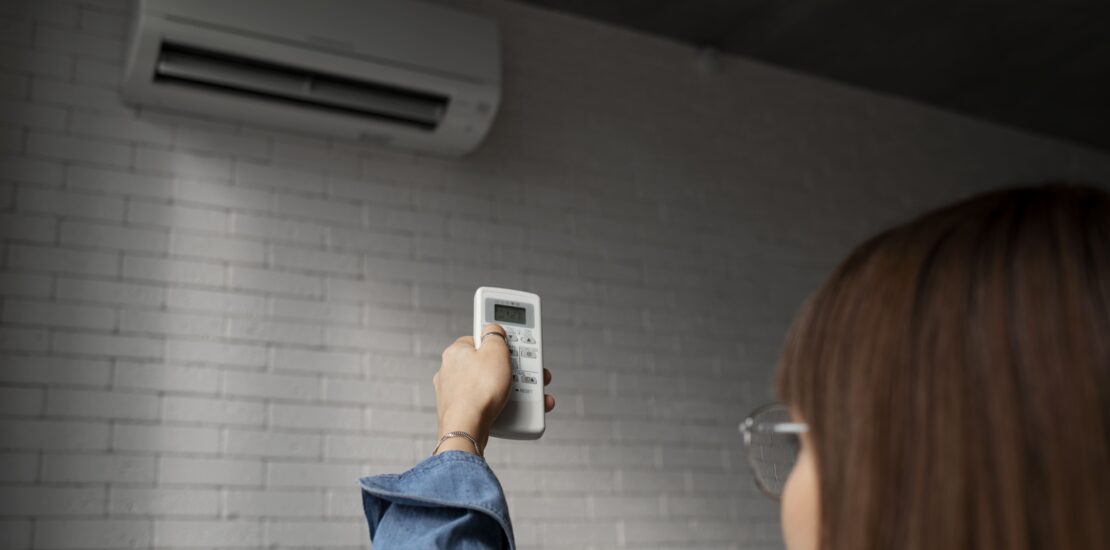
Why Does My AC Keep Turning On and Off?
Why Does My AC Keep Turning On and Off?
If your air conditioner shuts off within a few minutes of starting, then kicks back on shortly after, it’s doing something called short cycling. The most common causes, in order of how often they turn out to be the actual problem, are a dirty air filter, an oversized unit, a thermostat reading the wrong temperature, low refrigerant, and a failing capacitor or control board.
A normal AC doesn’t run in short bursts. On a hot day, a properly sized system typically runs for 15 to 20 minutes per cycle, cycling on and off roughly 3 to 6 times an hour. If your unit is starting and stopping every 2 to 5 minutes, that’s short cycling — and left alone, it does real damage: the compressor takes the hardest hit every time it starts, your energy bill goes up because starting a compressor uses far more power than running one, and your home never actually dehumidifies properly, since that only happens during the second half of a full cycle.
Here’s the fastest way to work through it: check the things that cost nothing first, then move to the ones that need a technician.
Check first (free, 5 minutes):
- Air filter — pull it out and hold it up to a light. If you can’t see light through it, that’s likely your answer.
- Thermostat location and setting — is it on an interior wall, away from direct sun, vents, or lamps?
- Vents and registers — are any closed, blocked by furniture, or was there recent renovation work near the ductwork?
Needs a technician: 4. Refrigerant level and leaks 5. Frozen evaporator coil (usually downstream of one of the above) 6. Capacitor, relay, or control board 7. Incorrectly sized unit
How to Tell These Causes Apart
This is the part most guides skip, and it’s the part that actually matters — several of these causes produce the same symptom, which is why people replace a thermostat when the real problem was a refrigerant leak the whole time.
| Symptom | Likely cause |
| Weak airflow, unit runs warm, no ice anywhere | Dirty filter |
| Weak airflow plus ice on the copper line outside | Low refrigerant, or a dirty filter that’s gone unaddressed long enough to freeze the coil |
| Hissing from the outdoor unit, ice on the lines, AC barely cools before shutting off | Refrigerant leak |
| Cools the room fast, then shuts off completely, room feels humid despite being “cool” | Oversized unit |
| Runs almost constantly, never seems to catch up | Undersized unit |
| Shuts off instantly on startup, clicking or buzzing from the outdoor unit | Capacitor or compressor |
| Cycles fine in the morning, short-cycles by afternoon | Thermostat placement (afternoon sun hitting it) |
| Breaker trips, or AC won’t restart at all | Electrical fault — stop testing, call a technician |
If you take one thing from this article, take this: ice on the lines and weak airflow can mean either a dirty filter or a failing refrigerant system, and they need opposite fixes. Swapping a filter takes five minutes. Chasing a phantom refrigerant leak with no ice present wastes a service call. Check the filter before anything else — it rules out or confirms the cheapest explanation first.
The Misdiagnosis Homeowners Make Most Often
People almost always blame the thermostat. It’s the part you can see and touch, so it feels like the obvious suspect. But an oversized unit produces nearly identical symptoms — quick cool-down, then shutoff, then the house creeps back up in temperature — and no amount of recalibrating or replacing the thermostat fixes that, because the thermostat isn’t broken. It’s reporting accurately; the unit is just too powerful for the space and finishes its job before the cycle is designed to end.
The tell: if you’ve already replaced or recalibrated the thermostat and the short cycling didn’t change at all, stop troubleshooting the thermostat. The next thing to check is unit sizing, which requires a load calculation from an HVAC technician — not something you can eyeball.
Causes, in Detail
1. Dirty or Clogged Air Filter
A clogged filter restricts airflow across the evaporator coil. With less air moving across it, the coil gets colder than it’s designed to, and the system’s safety controls shut it down before it freezes completely. This is the single most common cause of short cycling, and it’s also the cheapest to rule out.
Fix: Replace the filter if you can’t see light through it. As a baseline, most homes need a new filter every 60–90 days, sooner if you have pets or run the AC constantly through summer.
2. Oversized AC Unit
A unit sized larger than the space needs will cool the air fast, satisfy the thermostat, and shut off — before it’s run long enough to also pull humidity out of the air. The room reads “cool” on the thermostat but still feels damp. Then the temperature creeps back up quickly (since the air is still humid), and the cycle restarts. This is short cycling by design flaw, not by malfunction, and it’s also why an oversized unit runs up your energy bill despite “working less” — compressor startup draws the most power in the entire cycle, and an oversized unit is starting up far more often.
Fix: There’s no DIY fix here. An HVAC technician needs to run a load calculation (based on square footage, insulation, windows, and climate) to confirm the unit is actually oversized, and the real fix is replacing it with a correctly sized system.
3. Faulty Thermostat or Incorrect Placement
A thermostat near a heat source — direct sun through a window, a lamp, a kitchen wall — reads the room as warmer than it is and shuts the AC off prematurely, or cycles it more often than needed chasing a temperature that isn’t real. A thermostat on an exterior wall can read artificially cold in the same way.
Fix: Confirm placement first — interior wall, away from direct sunlight, vents, and appliances — before assuming the unit itself is faulty. If placement is correct and the problem persists, the thermostat’s internal sensor may be degraded, especially in units older than 10 years; a smart thermostat replacement resolves this and adds cycle-tracking you can check yourself going forward.
Also Read: How to reset ac thermostat
4. Low Refrigerant or a Leak
Refrigerant is what actually absorbs heat from your home’s air — it’s not “used up” like fuel, so if the level is low, something is leaking. Low refrigerant means the system can’t pull enough heat out of the air per cycle, pressure inside the system drops, and the compressor shuts off as a protective measure, then tries again shortly after.
Signs specific to this cause: hissing from the outdoor unit, ice forming on the refrigerant line (not the indoor coil), and noticeably weaker cooling than usual even when the system is running.
Fix: Refilling refrigerant without finding and sealing the leak just delays the same problem. This needs a licensed technician — refrigerant handling is also federally regulated (EPA Section 608), so it’s not a legal DIY fix either.
5. Frozen Evaporator Coil
Once airflow is restricted for long enough — from a dirty filter, blocked vents, or low refrigerant — moisture on the coil freezes. A frozen coil can’t absorb heat, so the system shuts off; as the ice melts over the following hour or two, it can briefly start working again before freezing over once more. This is usually a downstream symptom of cause #1 or #4, not a standalone problem.
Fix: Turn the system off (not just the thermostat — flip it to “off” so the fan isn’t pulling warm, humid air across a block of ice) and let it thaw fully, which can take a few hours. Check and replace the filter while you wait. If it refreezes within a day or two of resuming normal use, the underlying cause is refrigerant, not the filter, and needs a technician.
Also Read: Clean ac evaporator coils yourself
6. Electrical Faults — Capacitor, Relay, or Control Board
The capacitor gives the compressor and fan motors the jolt of power they need to start. A weakening capacitor can start the motor, fail to sustain it, and cause an immediate shutdown — often within seconds of the unit turning on. A failing control board can cause similar false starts.
Signs specific to this cause: the AC shuts off almost immediately after starting (not after 2-3 minutes like most other causes), a clicking or humming sound from the outdoor unit right before it shuts off, or a breaker that trips.
Fix: Don’t test this yourself — capacitors hold a charge even when the unit is unplugged and can deliver a serious shock. This is a technician call every time.
7. Blocked Vents or Damaged Ductwork
Closed vents, furniture blocking a register, or crushed/disconnected ductwork restrict airflow the same way a dirty filter does, which can trigger the same overheating shutoff. A common clue: this often starts right after furniture rearranging, a renovation, or storage changes near ducting in an attic or crawlspace.
Fix: Walk through the house and confirm every vent is open and unobstructed. If airflow is still uneven room to room after that, the ductwork itself may be leaking or crushed, which needs an inspection.
Routine Maintenance That Prevents Most of This
Most short cycling traces back to airflow or refrigerant — both of which routine maintenance catches before they cause a shutdown:
- Replace the filter every 60–90 days
- Have refrigerant levels checked annually, ideally at the start of cooling season
- Keep the outdoor condenser clear of leaves, grass clippings, and debris (a 2-foot clearance is a reasonable rule of thumb)
- Get evaporator and condenser coils professionally cleaned once a year
- Confirm vents stay open and unobstructed after any furniture or renovation changes
If you’ve worked through the checklist above and you’re still short cycling, that’s a strong sign it’s one of the technician-required causes — refrigerant, electrical, or sizing — rather than anything you can fix from the free-check list.