
AC Not Keeping Up with Temperature: Causes & Fixes
Why is my AC not keeping up with the set temperature
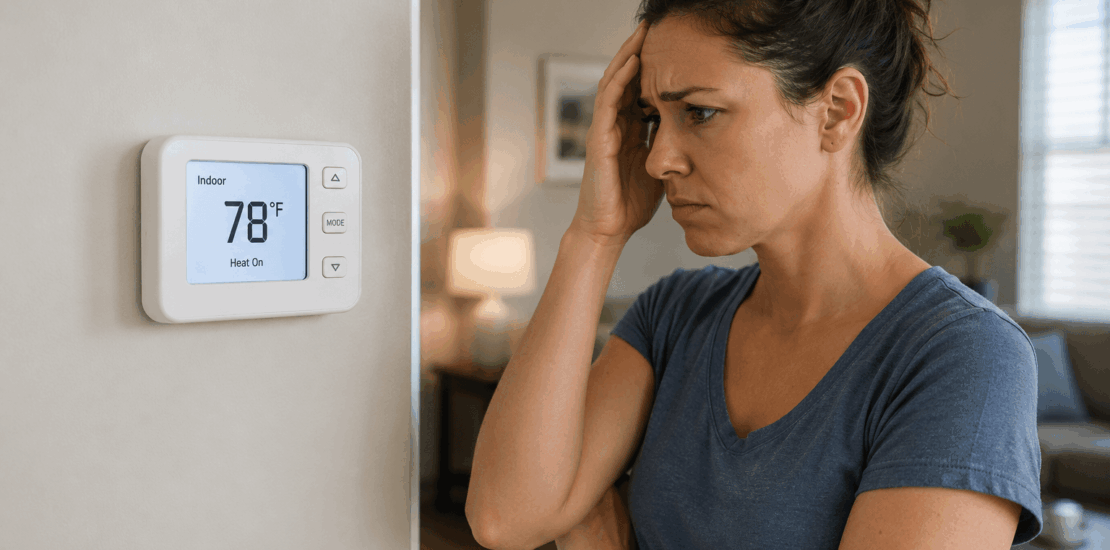
It is the middle of a sweltering summer day. You walk over to your thermostat, hoping for a blast of refreshing, cool air, only to find a frustrating discrepancy. You set the dial to a comfortable 72 degrees, but the indoor temperature stubbornly reads 78. If you find yourself desperately typing, “Why is my AC not keeping up with the set temperature?” into a search engine, you are not alone.
This is one of the most common HVAC complaints homeowners face during the peak of summer. It is incredibly frustrating to hear your system working overtime, yet you are still sweating in your own living room. When an air conditioner not keeping up becomes a daily occurrence, it usually points to an underlying issue regarding airflow, refrigerant levels, mechanical failure, or even the thermal envelope of your home.
In this comprehensive guide, we will explore exactly why your system is struggling, how to diagnose the root causes, and what actionable steps you can take to restore comfort to your home.
The Disconnect: AC Thermostat Setting vs Actual Room Temperature
Before assuming your entire HVAC system is broken, it helps to understand the relationship between the AC thermostat setting vs actual room temperature. Your thermostat acts as the brain of your climate control system. However, it only measures the temperature of the air immediately surrounding it.
If your thermostat is installed near a drafty window, directly under a supply vent, or in a hallway that gets little airflow, it will get a skewed reading of your home’s actual temperature. Furthermore, heat rises. If you have a two-story home with a single-zone system, the upstairs will naturally be warmer than the ground floor where the thermostat might be located.
If the thermostat reads your desired temperature but the rest of the house feels hot, you may have an air balancing issue or a poorly placed sensor. But what if the thermostat itself is reading a high temperature, proving that the system is simply failing to cool the space?
Let’s dive into the common culprits.
Also Read: Why does my thermostat have no power?
What Temperature Drop Can Your AC Realistically Achieve?
Many homeowners are surprised to learn that most central air conditioning systems are engineered to deliver a temperature drop of about 15 to 20 degrees below the outside temperature. So, on a blistering 95-degree day, even a healthy AC might only bring your indoor air down to roughly 75–80 degrees, regardless of whether your thermostat is set for something cooler.
This isn’t a flaw—just physics and system design. Your cooling equipment isn’t magic; it’s working against relentless heat gain from sun-baked roofs, leaky doors, and windows that refuse to shut all the way. If your expectations don’t match what your system was sized and built to accomplish, you’ll end up disappointed, sweaty, and maybe a little bewildered at your energy bill.
But what if the thermostat itself is reading a high temperature, proving that the system is simply failing to cool the space?
7 Mechanical Reasons Your Air Conditioner is Struggling
When you notice your ac not keeping up with set temperature, the problem often lies within the mechanics of the system itself. Here are the top seven mechanical issues that cause cooling loss.
1. A Suffocated System: The Clogged Air Filter
Your air conditioner needs to breathe. It pulls warm air from your home, removes the heat, and pushes cold air back in. If the air filter is blocked by layers of dust, pet hair, and debris, airflow is severely restricted.
If you are wondering how to tell if AC air filter is clogged, look for these signs:
- The filter appears visibly gray or caked in dust.
- When you hold the filter up to a light source, no light passes through.
- There is a noticeable drop in the airflow coming from your vents.
- Your AC runs longer cycles than usual.
Replacing a clogged filter is the easiest and cheapest fix when your ac not keeping up with temperature. Check it monthly, especially during peak summer months or if you have pets.
2. Low Refrigerant Levels
Air conditioners do not actually “create” cold air; they remove heat from the indoor air using a chemical cooling agent called refrigerant. If your system has a leak, it will eventually run low on this vital fluid.
Knowing the signs of low refrigerant in central air can save your compressor from completely burning out. Watch for:
- Hissing or bubbling noises: This indicates a leak in the refrigerant lines.
- Warm air from vents: The system is running, but the ac not cooling the air because it cannot absorb the heat.
- Ice on the refrigerant lines: Ironically, low refrigerant drops the pressure in the evaporator coil, causing surrounding condensation to freeze.
If you suspect a leak, do not attempt to top it off yourself. Handling refrigerant requires a licensed professional who can locate and patch the leak before recharging the system.
Also Read: AC Struggling to Cool House
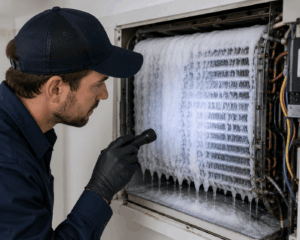
3. A Frozen Evaporator Coil
Located inside your indoor air handler, the evaporator coil is where the actual cooling takes place. As mentioned above, restricted airflow (from a dirty filter) or low refrigerant can cause the condensation on this coil to turn into a solid block of ice. Once frozen, the coil can no longer absorb heat, meaning you will experience your central ac not keeping up with set temperature.
If you suspect this issue, follow these frozen evaporator coil troubleshooting steps:
- Turn the AC off immediately at the thermostat. Leaving it on will force the compressor to overwork and potentially break.
- Turn the fan setting from “Auto” to “On” to force warm indoor air over the ice and help it melt.
- Check and replace your air filter if it is dirty.
- Check all supply and return vents to ensure they are open and unblocked by furniture.
- Wait a full 24 hours for the ice to melt before turning the AC back on. If it freezes again, call a technician.
4.Ice Forming on Your Outdoor AC Unit
Seeing ice build up on your outdoor AC unit? This is never a good sign. Ice on the condenser typically means your system is struggling with either low refrigerant levels, inadequate airflow, or clogged coils—sometimes all of the above. Even a small patch of frost can signal things aren’t running as they should.
If you spot any ice on the unit, turn your AC off right away to prevent unnecessary strain or potential damage. Once it’s off, check your air filter and replace if needed, and make sure nothing is blocking the outdoor unit. If the ice reappears after thawing, it’s time to call a professional to investigate and resolve the underlying issue.
5. Dirty Condenser Coils
While the indoor unit absorbs heat, the outdoor unit (the condenser) releases that heat into the outside air. Because this unit sits outdoors, it is exposed to dirt, pollen, grass clippings, and leaves. Over time, this debris coats the metal fins of the condenser, acting like an insulating blanket that traps the heat inside.
When the heat cannot escape, the system becomes highly inefficient. Cleaning condenser coils for better efficiency is a crucial maintenance task. You can carefully wash the outside of the unit with a standard garden hose (avoid high-pressure power washers, which can bend the delicate fins) to remove loose debris and allow your system to release heat properly.
Also Read: Why does my air conditioner smell like vinegar?
6. Ductwork Leaks and Blockages
Sometimes the system is cooling the air perfectly, but that chilled air never makes it to your living spaces. If you have older or poorly installed ductwork, up to 30% of your conditioned air could be escaping into your attic or crawlspace.
Leaky ductwork symptoms and cooling loss include:
- Uneven cooling throughout the house (e.g., one room is freezing, another is boiling).
- Unusually high summer utility bills.
- Excessive dust circulating in your home.
- A feeling of low air pressure coming from the supply vents.
Having an HVAC professional inspect and seal your ducts with mastic sealant or specialized metal foil tape can dramatically improve your home’s comfort.
7. Clogged Condensate Drain Line
As your AC cools the air, it also acts as a dehumidifier, pulling moisture out of your indoor environment. This moisture drips into a drain pan and flows outside through a white PVC pipe known as the condensate drain line.
Over time, algae, mold, and dust can create a sludge that blocks this pipe. Clogged condensate drain line symptoms include a musty odor near the indoor unit, water pooling around the air handler, and, in many modern systems, an automatic shut-off switch being triggered. If your AC suddenly stops running or the thermostat goes blank, a backed-up drain line might have tripped a safety float switch.
Also Read: How to check if the compressor is bad?
8. A Failing Compressor
The compressor is the heart of your air conditioning system, responsible for pumping refrigerant between the indoor and outdoor units. If the compressor is failing, your system simply cannot cool.
Keep an eye (and ear) out for AC compressor failure warning signs:
- Loud grinding, screeching, or clattering noises from the outside unit.
- The outdoor fan spins, but you do not hear the distinct, deep hum of the compressor kicking on.
- Frequent tripped circuit breakers when the AC attempts to start.
- Noticeably decreased cooling capacity.
Your AC should operate quietly. If you start to hear rattling, squealing, or grinding noises, it often points to loose components, worn belts, or motors on their last legs—issues that need prompt attention before they snowball into bigger (and pricier) problems. Unusual sounds are rarely “just a quirk” and usually signal that something inside the compressor or its immediate neighbors is about to fail.
Compressor replacement is a major repair. If your system is over 10 to 15 years old, a failing compressor usually means it is time to consider replacing the entire outdoor unit.
Also Read: How to reset a thermostat?
Environmental and Home Factors Affecting Cooling
If you find yourself asking, “Why is my AC not keeping up?”, the answer might not be a mechanical failure at all. Sometimes, the environment puts a heavier load on your system than it was designed to handle. If you notice the air conditioner running but house stays warm, look at these external factors.
The Impact of Humidity
There is a massive correlation between high outdoor humidity and AC performance. An air conditioner has two jobs: lowering the temperature (sensible cooling) and removing moisture (latent cooling).
On an incredibly humid day, the air conditioner has to expend a massive amount of its energy just to pull the thick moisture out of the air before it can effectively lower the temperature. Because the system is working so hard to dehumidify, it may struggle to reach the number on your thermostat. If you live in a highly humid climate, supplementing your HVAC system with a whole-home dehumidifier can take the strain off your AC.
Heat Intrusion and Poor Insulation
Your AC can only cool your home if the house is capable of holding onto that cold air. Improving home insulation for better cooling is one of the most effective ways to help your air conditioner out.
If your attic has degraded or insufficient insulation, radiant heat from the roof can bake your top floors. Additionally, check for air leaks around doors and windows. Weatherstripping and caulking are inexpensive ways to stop the cold air from seeping out and the hot summer air from drafting in.
It’s also worth doing a quick walk-through to ensure all your windows and doors are fully shut and latched. You’d be surprised how often a slightly cracked window or door is the true culprit behind rooms that just won’t cool down. Even a small gap can let in a surprising amount of heat, making your AC work overtime.
The Greenhouse Effect in Your Living Room
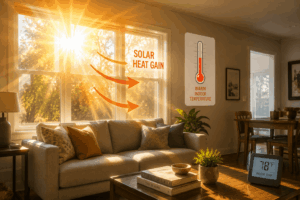
Windows are a major source of heat gain. As the sun beats down on the glass, radiant energy enters your home, acting like a greenhouse. If you have large, south-facing or west-facing windows, the rooms associated with them will be notoriously difficult to cool.
Reducing solar heat gain through windows can significantly reduce the load on your AC. You can achieve this by:
- Installing thermal-backed blackout curtains or cellular shades and keeping them drawn during the hottest parts of the day.
- Applying UV-blocking, reflective window tint to your glass panes.
- Planting shade trees or installing exterior awnings to block direct sunlight.
Is Your System Just the Wrong Size?
“Why does my AC run all day?” is a question HVAC technicians hear constantly in July and August. While long cycles are normal on 100-degree days, a system that runs 24/7 without ever reaching the set temperature might be improperly sized for the home.
It’s important to note that most central air conditioners are designed to cool your home to about 15 to 20 degrees below the outdoor temperature. So if it’s 95°F outside, your system may realistically only be able to bring your indoor temperature down to 75–80°F, even if your thermostat is set to 70. This doesn’t necessarily mean your air conditioner is failing—it could simply be operating at full capacity and still not quite keeping up with extreme heat.
Here’s something many homeowners don’t realize: air conditioning systems are sized for average summer conditions—not the absolute hottest days of the year. During installation, a professional should perform a “Manual J Load Calculation,” which takes into account your home’s square footage, ceiling height, window placement, insulation, and even your home’s orientation to the sun and regional climate. There is a delicate balance regarding an undersized HVAC system vs cooling demand.
If your system is too small (undersized), it lacks the raw cooling capacity, or “tonnage,” to counteract the heat entering the home. It will run endlessly, driving up your electric bill and wearing out its parts, all while you wonder why is my ac not keeping up with the temperature.
Conversely, an oversized system is not good either. It will cool the house too rapidly and shut off (short cycling) before it has a chance to pull the humidity out of the air, leaving your home feeling cool but clammy and damp. If your system has never been able to keep up since the day it was installed, sizing is likely the culprit.
Proper system sizing is critical—not just for comfort, but for efficiency, humidity control, and the overall longevity of your air conditioner. If you suspect your AC wasn’t sized after a true Manual J calculation, or if it’s always struggled to keep up, a professional evaluation might be in order before you look for more complicated solutions.
How to Prevent Cooling Loss: The Ultimate Homeowner Checklist
The best way to stop asking “why is my ac not keeping up with set temperature” is to be proactive. A well-maintained air conditioner runs more efficiently, costs less to operate, and has a significantly longer lifespan.
Here is a practical HVAC preventive maintenance checklist for homeowners to follow:
- Monthly Tasks:
- Inspect your indoor air filters. Replace them every 30 to 90 days depending on the MERV rating, household dust levels, and whether you have indoor pets.
- Keep supply and return registers open and unblocked by rugs or furniture.
- Spring/Early Summer Tasks:
- Clear the area around the outdoor condenser unit. Ensure there is at least two feet of clearance from bushes, tall grass, and yard debris to allow proper airflow.
- Gently rinse the outdoor condenser coils with a garden hose to remove winter grime and pollen.
- Pour a quarter-cup of white vinegar down the indoor condensate drain line to kill algae and prevent sludge build-up.
- Annual Tasks:
- Schedule a professional tune-up with a licensed ac technician. They will check the electrical connections, measure the refrigerant charge, test the compressor’s amp draw, and ensure the system is calibrated perfectly for the heavy summer load.
When It’s Time to Call an HVAC Technician
Not every cooling issue is a quick DIY fix. Some problems signal deeper trouble that requires a professional’s touch. Here are the telltale signs it’s time to pick up the phone:
- Air is blowing, but it doesn’t seem cold enough. You should expect about a 16- to 20-degree difference between the air coming out of your supply vents and the temperature of your room. If you’re not feeling that chill, something’s off.
- The AC runs constantly but never cools, even in the evening. On scorching days, your system may struggle, but once the sun sets, it should start catching up. If it doesn’t, there’s likely an underlying issue.
- You hear rattling, squealing, or grinding noises. Your air conditioner should hum along quietly. Odd noises point to loose parts, worn belts, or failing motors—problems that get worse (and more expensive) if ignored.
- Ice is forming on the outdoor unit. Even a little visible ice is a clear sign of trouble—often low refrigerant, restricted airflow, or clogged coils. Shut the system off and call a technician before further damage occurs.
Conclusion
Dealing with an AC that refuses to cool your home is a stressful, sweaty experience. When you find yourself wondering, “Why is my AC not keeping up with the set temperature?”, remember that it is usually a symptom of restricted airflow, mechanical strain, or environmental heat gain.
Start with the basics: check your thermostat settings, swap out your air filter, and wash away the dirt from your outdoor unit. Also, consider simple home improvements like closing the blinds to reduce solar heat gain.
For even better results, keep these quick tips in mind:
- Keep sunlight out. Close blinds and curtains on sun-facing windows, especially in the afternoon, to block excess heat.
- Use ceiling fans. They help rooms feel cooler and ease the workload on your AC.
- Aim for realistic thermostat settings. On sweltering days, your system may top out at 74–76°F even if you’re wishing for lower.
If these DIY steps do not resolve the issue, do not hesitate to call in a professional to check for low refrigerant or a failing compressor. With a little troubleshooting and proper maintenance, you can ensure your home stays comfortably crisp all summer long.