
How to Prevent Condensation on AC Vent: 5 Essential Tips
How to Prevent Condensation on AC Vent: 5 Essential Tips
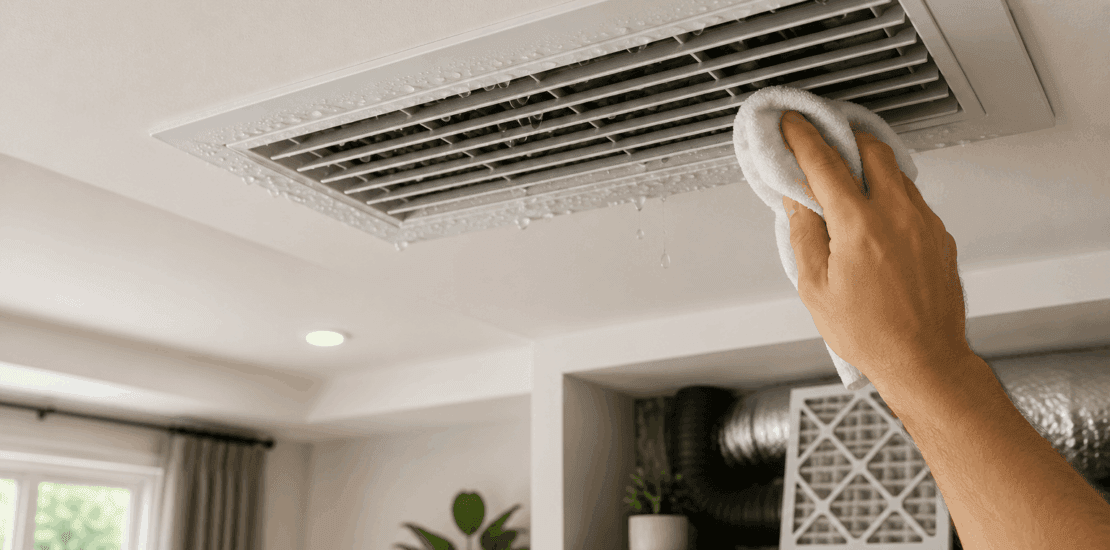
Water drops around your vent happen because warm room air meets a cold surface. This creates moisture, and that moisture turns into visible drips. The good news is this problem can be fixed with a few simple steps, which we explain below.
If you have noticed wet spots or condensation on AC vents near your ceiling or walls, you are not alone. This is a common household issue, and many families deal with it every single summer. Let’s break down what causes condensation on air vents and how you can stop it in a better way.
Understanding Air Conditioning Vent Condensation
Before fixing anything, it is better to understand the basic science behind this problem. Once you know the cause, the solution becomes much easier to apply.
Air always contains water vapour, moisture you cannot see. The amount of moisture air can hold depends entirely on its temperature. Warm air holds a lot of moisture. Cold air holds very little.
When warm, humid room air comes into contact with a cold metal vent surface, the air suddenly cannot hold as much moisture anymore. That excess moisture has to go somewhere, and it settles on the cold surface as liquid water droplets. This leads to the formation of condensation at air vents, and it follows the same principle as a cold glass of water sweating on a hot summer day.
Also Read: is mold in air conditioner dangerous?
What Causes Condensation on Air Vents?
Cold air inside the duct cools the metal vent cover. When warm, humid room air touches this cold surface, condensation occurs and water forms. This is the same reason a cold glass of water gets wet on the outside during a hot day. The vent acts like that glass, and the room air acts like the surrounding warmth.
Several factors can make this worse. Poor insulation, high humidity, and blocked airflow are the biggest reasons. Each of these adds extra moisture or extra cold, which speeds up the dripping process considerably.
Why Is There Condensation at AC Vents in My Home?
One factor that rarely gets discussed is AC unit sizing. Many homes, particularly older ones, have AC systems that were installed too large for the space. This is known as “short cycling.” The unit blasts cold air quickly, reaches the set temperature, shuts off, and never runs long enough to properly dehumidify the air.
Several factors can trigger or worsen the problem. In most homes, it is not just one cause but a combination of two or three working together.
Also Read: ac not keeping up with set temperature
| Cause | Why It Leads to Dripping |
| Uninsulated or poorly insulated ducts | Cold air inside the duct chills the outer surface, which then meets warm room air |
| Blocked or restricted vents | Reduced airflow increases the temperature difference between the duct and the room |
| High indoor humidity | More moisture in the air means more water available to condense |
| Dirty or clogged air filter | Restricts airflow, causing ducts to run colder than intended |
| Oversized AC unit | Cools air too quickly without running long enough to remove humidity from the air |
| Duct leaks | Cold air escapes into warm wall or ceiling cavities, creating condensation inside the structure |
| Inadequate vapor barrier | In humid climates, moisture can migrate through walls and condense on cold duct surfaces |
The last two causes—duct leaks and missing vapor barriers—are particularly important because they can cause condensation inside your walls, which you will never see until there is already mold or structural damage.
Identifying Where Condensation From AC Vent Occurs
Each type of vent operates differently. AC vent condensation mostly takes place in these common rooms:
- Bedroom – Closed space with limited airflow can trap humidity, especially overnight.
- Living Room – Frequent door opening and higher foot traffic bring in warm, moist air.
- Kitchen – Cooking results in steam and heat, which increases indoor humidity.
- Bathroom – Showers and hot water create high moisture, leading to condensation near vents.
- Basement – Naturally cooler and more humid, making it prone to moisture buildup.
- Laundry Room – Washing and drying clothes release excess moisture into the air.
Some rooms are far more prone to this issue, so let’s look more closely at where it is mostly found.
Also Read: How to stop water dripping from ac vent?
Condensation on AC Vent in Bathroom Areas
Bathrooms are naturally more humid because of showers and hot water use. This extra moisture in the air makes the vent cooler much faster than in other rooms. As a result, water droplets form quickly, sometimes within minutes of running a hot shower.
This is a very common complaint, and it usually needs a slightly different fix compared to bedrooms or living rooms. Better bathroom ventilation, such as an exhaust fan, often solves this alongside general repairs to the system.
Signs of Excessive Condensation on Bathroom AC Vent
Here are the warning signs worth watching for:
- Water stains or rings on the ceiling
- A musty or damp smell near the vent
- Peeling paint around the vent cover
- Mold spots forming close to the duct opening
- Constant dripping even when the AC is switched off
If you notice two or more of these signs together, it usually means the moisture problem has been quietly building for a while. Acting early prevents bigger repairs down the road.
Also Read: Air conditioner struggling to cool house
Essential Tips to Prevent Condensation on Air Vents
Let us now discover the practical fixes. These five tips include the best solutions used by HVAC experts across many climates.
1. Improve Duct Insulation
If ducts are wrapped with sufficient insulation, the cold air of the duct will not touch any warmer surface. The implementation of this remedy addresses a significant portion of condensation on air vents issues found in homes.
Foam or fiber glass insulation sleeves are commonly used for this purpose. They are affordable, and they can be added without replacing the entire duct system. A professional can measure the duct size and fit the correct insulation thickness.
2. Maintain Proper Airflow
When the supply of air is blocked or restricted, it can make noise as it passes through the duct connection. As a result of this alteration in pressure, the surfaces surrounding the opening of the vent become cool, causing uninvited moisture to form, leading to air conditioning vent condensation.
Common airflow blockers include:
- Furniture pushed against or directly below a vent.
- A curtain or blind covering a vent opening.
- Rugs positioned above floor vents.
- Dampers in infrequently used rooms are partially closed.
How to Prevent It:
- Make sure furniture, curtains, or rugs are never blocking any vent in the home.
- Keep at least a few inches of open space around every vent you have.
This simple habit keeps air moving freely throughout the day.
3. Check and Repair Leaky Ducts
The U.S. Department of Energy estimates that the average home loses 20 to 30 percent of conditioned air through duct leaks. Beyond the energy waste, these leaks are a direct cause of condensation from AC vents and hidden moisture damage. Small holes or gaps in your ductwork can allow cold air to escape into warmer areas. The mixing of temperatures is a significant factor in the moisture buildup at vents.
How to Prevent It:
- Though the visual inspection can uncover obvious gaps, a trained eye finds small leaks.
- Usually, fixing the leaks with mastic sealant or metal tape can be done within a day.
4. Regular HVAC Maintenance
Having regular examinations helps to ensure that any issues are fixed before they become a big issue. A properly functioning system will operate under the right temperature and humidity conditions and thus manage moisture levels, preventing condensation from AC vents.
How to Prevent It:
| Task | Suggested Frequency |
| Replace air filter | Every 1–3 months |
| Clean vent covers | Every 3 months |
| Professional inspection | Twice a year |
| Check thermostat settings | Every season change |
| Inspect ductwork | Once a year |
Following this schedule keeps the system efficient, and it lowers the risk of moisture-related damage over time.
Also Read: How to repair heating and air conditioning?
5. Use Dehumidifiers in High-Humidity Areas
Due to coastal or tropical climates, the air-conditioning systems might not be able to manage the humidity on their own. Using a dehumidifier helps remove excess moisture from the air before it can reach the vent surface.
A dedicated dehumidifier fills that gap. Options include:
- Portable room dehumidifiers — Effective for single high-humidity rooms like bathrooms, basements, or laundry rooms. Units rated at 30 to 50 pints per day are sufficient for most rooms.
- Whole-home dehumidifiers—Installed directly into the HVAC system and treat all the air passing through it. These are the most effective long-term solution and are controlled alongside your thermostat.
Running a dehumidifier reduces the amount of moisture available in the air, which lowers the chance of condensation on AC vents regardless of how cold the vent surface gets. It also reduces the load on your AC unit, extending its operational life.I
Wrapping Up: Keeping Your Vents Dry All Year Round
Vents drip due to the process of condensation. Most homes will stay dry and safe throughout the year with correct air flows, sealed ducts, good insulation, and good density controls.
Simple steps like checking filters monthly and keeping vents clear can help. If the issue continues, it may indicate a deeper system problem that requires professional inspection.
This is where COOL-AID CO. can help. Our team offers professional inspections, duct sealing, and full HVAC maintenance services designed to keep your home comfortable and free from unwanted moisture. If you are dealing with a persistent vent issue, reaching out to a qualified technician is always a smart, worry-free step toward a healthier home.