
Why does my ac smell like vinegar?
Why Does My AC Smell Like Vinegar? (And Is It Dangerous?)
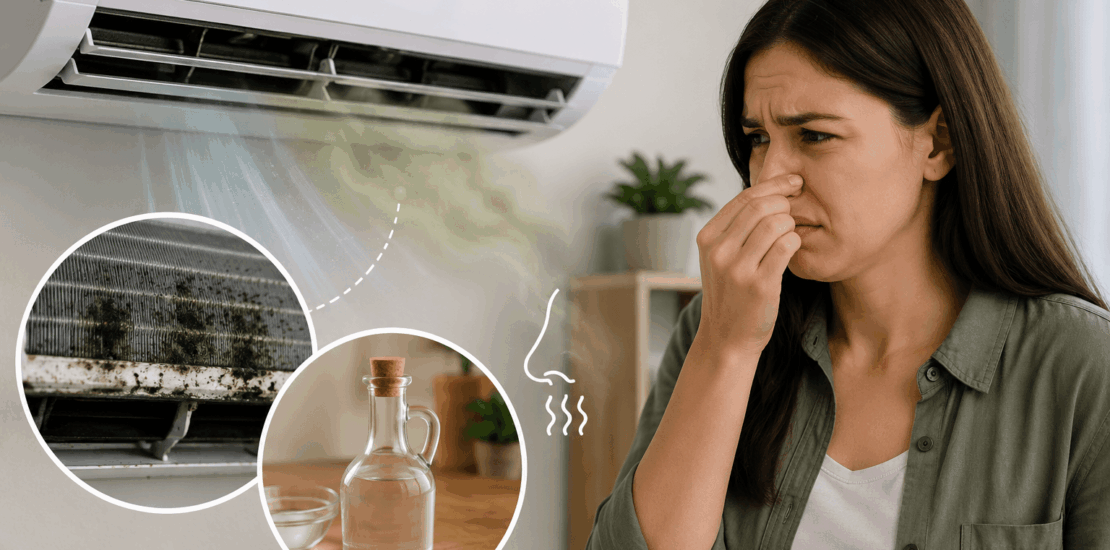
A sour, vinegar-like smell from a home AC — central, window, portable, or mini-split — is almost always mold, mildew, or bacteria growing somewhere moisture collects: the condensate drain line, the drip pan, or the evaporator coil. It’s unpleasant and worth fixing, but on its own it isn’t dangerous.
What actually is worth acting on quickly is a different kind of smell: sharp, chemical, or like something’s burning. That points to an electrical fault or an aging motor, not moisture — and that one does warrant calling a technician promptly rather than reaching for a cleaning solution.
| What it smells like | Likely cause | Urgency |
| Sour, like vinegar or wet socks | Mold, mildew, or bacteria in the drain line, drip pan, or coil | Not urgent — clean it yourself first |
| Sharp, chemical, or like ozone | Electrical fault, worn motor, or overheating component (more common in units over 10 years old) | Call a technician |
| Faint sweetness, no sourness | Sometimes mistaken for the same issue, but worth mentioning refrigerant if you also notice weak cooling | Call a technician |
| Musty but not sour | Similar mold/mildew source, earlier stage | Not urgent — clean, then monitor |
One correction worth making up front: refrigerant leaks are sometimes blamed for a vinegar smell, but refrigerant itself is generally odorless or very faintly sweet — not sour. If your AC smells sour, it’s overwhelmingly a moisture and microbial growth issue, not refrigerant. Don’t spend time chasing a refrigerant leak based on smell alone; look at the drain line and coil first.
by Matúš Gocman (https://unsplash.com/@matgocman)
Why the Vinegar Smell Happens
Your AC removes humidity from the air as a byproduct of cooling — warm, moist air passes over the evaporator coil, and the moisture that condenses out is supposed to drain away through the condensate line into a drip pan and out of the unit. When that drainage path is blocked or the airflow around it is restricted, moisture sits somewhere it shouldn’t, and that’s exactly the environment mold, mildew, and bacteria need to grow. Their byproduct is a smell that reads as sour or vinegary.
The most common contributors to that blockage:
- A clogged condensate drain line — the single most common cause. Dust, algae, and debris build up inside the line over time and slow or stop drainage.
- A dirty air filter — restricts airflow across the coil, which changes how condensation forms and drains, and gives dust more chance to combine with moisture into the kind of grime that grows mold.
- A dirty evaporator coil — the coil itself collecting dust becomes a surface where moisture lingers instead of draining cleanly.
Less commonly, in units over about 10 years old, a sharp chemical or ozone-like smell (not vinegar — this is the one to take more seriously) can come from worn motor components or electrical arcing. This is the one case from the table above that isn’t a cleaning job.
Also Read: Air conditioner repair tips
How to Get Rid of It
- Turn the system off before doing any of this.
- Check and replace the air filter if it’s dirty — hold it to a light, and if you can’t see light through it, swap it.
- Clear the condensate drain line. Locate the drain line (usually a PVC pipe near the indoor unit) and check for visible clogs at the access point. A solution of roughly one part distilled white vinegar to one part water, poured through the line’s access point, breaks down algae and mild buildup without damaging the line — let it sit for 30 minutes, then flush with water. For a line that’s fully blocked, a wet/dry vacuum at the outdoor end can pull the clog free.
- Clean the drip pan if accessible — wipe it out and let it dry fully.
- Gently clean the evaporator coil if you can reach it, using a soft brush or a coil cleaner made for the purpose; avoid scrubbing hard enough to bend the fins.
- Ventilate while you work — open a window nearby to help clear any lingering odor while things dry out.
Give it a day after cleaning before judging whether the smell is gone — residual odor can linger briefly even after the actual source is cleared.
Preventing It From Coming Back
- Replace the air filter every 60–90 days
- Flush the condensate line with the vinegar-water solution above every few months as routine upkeep, not just when there’s already a smell
- Keep the drip pan dry and check it during filter changes
- Schedule an annual professional cleaning that includes the coil and drain line together, since they’re often the same root cause showing up in two places
When to Call a Professional
- The smell is sharp, chemical, or like something’s burning — not sour
- You’ve cleaned the filter, drain line, and coil and the vinegar smell persists
- The unit is 10+ years old and this is a new development
- You notice reduced cooling alongside the smell, which points to something beyond drainage
A persistent sour smell after cleaning usually means the clog is further down the line than a DIY flush can reach, or there’s a slower leak somewhere in the drain system — both are quick fixes for a technician with the right tools.
If you’re in the Philadelphia area and dealing with a smell that isn’t clearing up on its own, Cool Aid Co. can track down the source and clear it properly — don’t let it linger through a full cooling season.