How much does it cost to run window ac?
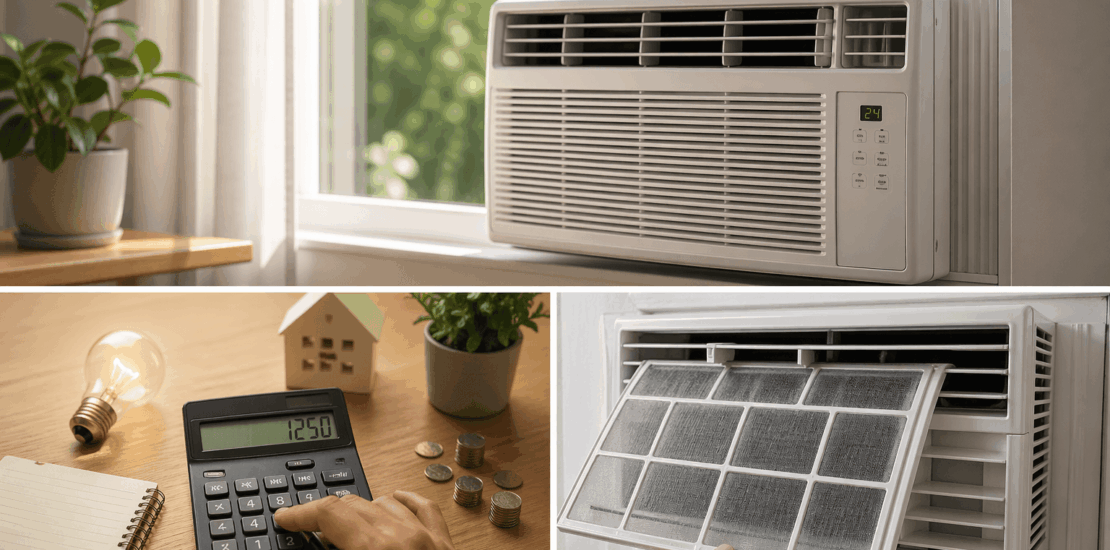
Running a window air conditioner can be a cost-effective way to cool your home. But how much does it cost to run a window AC unit? This question is on the minds of many homeowners and renters.
Understanding the costs involved can help you manage your energy bills better. Several factors influence the cost to run a window AC. These include the unit’s size, energy efficiency, and local electricity rates.
Usage patterns also play a significant role in determining costs. Knowing these factors can help you make informed decisions.
Window AC units are often more economical for cooling single rooms. They can be a great alternative to central air systems.
Energy efficiency is key to reducing costs. Units with higher EER or SEER ratings are more efficient.
This guide will explore these aspects in detail. You’ll learn how to optimize your window AC usage and save money.
Understanding Window AC Power Consumption
The power consumption of a window AC unit is a key factor in determining its running cost. On average, these units consume between 500 to 1500 watts per hour. This variance depends on the unit’s size and efficiency.
Calculating power usage involves knowing the wattage of your unit. Most units clearly display this on a label or in the manual. The higher the wattage, the more electricity it uses.
Energy efficiency is measured through ratings like EER or SEER. A unit with higher ratings uses power more efficiently.
To better understand power consumption, consider these factors:
- Unit size: Larger units typically consume more electricity.
- Cooling capacity: Higher capacity units use more energy.
- Operating time: Longer usage increases power consumption.
It’s important to choose a unit that matches the room’s size and cooling needs. By doing so, you ensure efficient power use, which reduces costs. Selecting the right unit can lead to significant long-term savings.
Key Factors Affecting Window AC Cost to Run
Several factors influence the cost of running a window AC unit. One major factor is the local electricity rate. Places with higher rates will see higher costs when using air conditioning.
The energy efficiency of the unit also plays a crucial role. More efficient models consume less electricity, translating to lower bills. Units with higher EER or SEER ratings are designed to be energy-efficient.
The frequency and duration of use directly impact costs too. The longer the unit runs each day, the higher the energy consumption will be. Users should consider their daily usage patterns to better manage costs.
Environmental conditions, like humidity and insulation, affect how hard the unit must work. Poor insulation can lead to increased energy use as the unit struggles to maintain the desired temperature.
Here’s a list of key factors to consider:
- Local electricity rates
- Unit energy efficiency (EER and SEER ratings)
- Usage frequency and duration
- Room insulation quality
- Environmental conditions
Additionally, the cost can vary depending on how well the unit is maintained. Regular cleaning and servicing keep the unit running efficiently, minimizing energy use. This maintenance ensures optimal performance and reduces unnecessary expenditure. Understanding these key factors helps in managing and reducing the operational costs of window AC units.
How to Calculate the Cost to Run a Window AC Unit
Calculating the cost of running a window AC unit requires a few simple steps. First, you’ll need the unit’s power consumption, measured in watts. This can usually be found on the unit’s label or in its manual.
Once you have the wattage, determine how many hours per day the AC will be used. Multiply the wattage by the number of hours used. This gives you the total watt-hours consumed daily.
Next, convert watt-hours to kilowatt-hours (kWh) by dividing by 1,000. This is because electricity is usually billed in kWh. Then, find out your local cost per kWh from your electricity bill.
With all this information, you can calculate the daily cost:
- Daily cost formula: [ (\text{Wattage} / 1000) \times \text{Hours Used Daily} \times \text{Cost per kWh} ]
To calculate the monthly cost, multiply the daily cost by the number of days the AC runs in a month.
Here’s a step-by-step list to follow:
- Find the unit’s wattage
- Determine daily usage hours
- Calculate daily watt-hours
- Convert to kilowatt-hours
- Check local electricity rates
- Use the formula for daily and monthly costs

by Sasun Bughdaryan (https://unsplash.com/@sasun1990)
Another factor to consider is the unit’s energy efficiency. An efficient unit can result in significant savings over time. Look for models with a high EER or SEER rating to ensure cost-effective operation.
Finally, remember that running costs can fluctuate based on external factors such as temperature changes and electricity rate adjustments. Regular monitoring and adjustments can help keep your costs in check.
Also read: is cheaper to repair or replace window air conditioner unit?

by Sasun Bughdaryan (https://unsplash.com/@sasun1990)
Real-World Examples: Window AC Running Costs
Let’s consider real-world scenarios to better understand window AC running costs. Imagine you own a 1,000-watt window AC unit. You plan to run it for six hours each day.
Assume the local electricity rate is $0.12 per kWh. First, multiply the unit’s wattage by usage hours: 1,000 watts x 6 hours = 6,000 watt-hours daily.
Convert watt-hours to kilowatt-hours: 6,000 / 1,000 = 6 kWh per day. Then, calculate the daily cost: 6 kWh x $0.12 = $0.72 per day.
If you run the AC every day, the monthly cost becomes $0.72 x 30 days = $21.60. This is your expected monthly expenditure in this scenario.
Here’s another example with a more efficient unit: a 500-watt AC run for eight hours. At the same electricity rate, the daily usage is 4 kWh, costing $0.48 per day.
In this case, the monthly cost is $14.40, showcasing potential savings with a smaller or more efficient unit. Your bill can vary based on factors like usage, temperature, and rates.
- Example summary:
- 1,000 watts, 6 hours: $21.60/month
- 500 watts, 8 hours: $14.40/month
These examples underscore the importance of efficiency in reducing costs.

by Eduardo Cano Photo Co. (https://unsplash.com/@eduardocanophotoco)
Comparing Window AC Costs to Other Cooling Options
Window AC units often provide affordable cooling for single rooms. However, understanding how they compare with other systems is essential.
Central air conditioning systems typically cool entire homes but at a higher operational cost. They consume more energy due to their larger capacity and coverage area.
Ductless mini-split systems are another alternative. They provide zone-specific cooling with efficiency similar to, or sometimes better than, window units.
Portable ACs offer flexibility but can be pricier to run due to reduced efficiency.
Here’s a quick comparison:
- Window AC: Best for single rooms; lower initial cost.
- Central AC: High upfront and running costs; whole-home cooling.
- Ductless Systems: Zone-specific; moderate efficiency.
- Portable ACs: Flexible but less efficient.
When deciding on a cooling option, consider initial cost, energy efficiency, and your specific needs.

by Almas Salakhov (https://unsplash.com/@therealslkhv)
The Role of Energy Efficiency Ratings (EER & SEER)
Energy efficiency ratings like EER and SEER play a crucial role in determining the cost to run window AC units. These ratings indicate how efficiently the unit uses electricity to cool a space.
Understanding EER and SEER
The Energy Efficiency Ratio (EER) measures a window AC’s efficiency at a specific temperature. A higher EER means better energy use. Conversely, the Seasonal Energy Efficiency Ratio (SEER) provides an overall annual efficiency rating, considering seasonal variations.
Why Ratings Matter
Choosing an AC unit with higher EER or SEER ratings can lead to substantial savings on energy bills. These ratings help consumers select units that consume less power for the same cooling effect.
Here are a few benefits of high EER and SEER ratings:
- Lower energy bills: Reduced electricity usage.
- Eco-friendly: Smaller carbon footprint.
- Enhanced comfort: Consistent cooling performance.
Opting for units with higher ratings can significantly reduce long-term costs. Always check for these ratings before buying a window AC.
How Local Electricity Rates Impact Your Bill
Local electricity rates play a significant role in determining the cost of running window AC units. Rates can vary widely depending on your location, affecting monthly energy expenses.
Regional Variations
Electricity prices are influenced by factors such as local energy sources, demand, and policy. In areas with higher rates, running a window AC unit can become a costly endeavor.
Maximizing Savings
Understanding local rates allows for better financial planning. Here are a few strategies to mitigate high electricity costs:
- Compare providers: Choose a supplier offering competitive rates.
- Time-of-use plans: Utilize lower off-peak rates where available.
- Monitor usage: Use energy tracking tools or smart meters.
By staying informed and adopting these strategies, you can effectively manage window AC costs in different rate zones.
Usage Patterns: How Habits Affect Your Costs
Usage habits greatly influence the cost to run a window AC unit. The longer the unit operates, the higher the energy expense.
Cooling Efficiency
Operating your AC during peak heat times increases costs. Meanwhile, running it during cooler hours conserves energy.
Consistent Maintenance
Regular cleaning and maintenance keep the unit running efficiently. Neglect can lead to higher energy consumption and costs.
Optimize Usage
Adjusting your usage patterns can lower expenses significantly. Consider these cost-saving habits:
- Use timers: Set the AC to turn off when cooling is unnecessary.
- Close windows and doors: Prevent cooled air from escaping.
- Use fans: Circulate cooled air for comfort without excess AC usage.
- Dress appropriately: Wear light clothing to stay comfortable at slightly higher temperatures.
Mindful usage patterns help maintain comfort while keeping energy costs in check. Emphasizing efficient habits can offer substantial savings over time.
The Impact of Room Size and Cooling Capacity
Room size is a critical factor in determining the efficiency of a window AC unit. A unit too small for a large room will strain to cool the space, hiking up energy costs. Conversely, an oversized unit for a small room wastes electricity, as it frequently cycles on and off.
Calculating Cooling Needs
It’s vital to match a unit’s cooling capacity to the room size. Capacity is typically measured in BTUs (British Thermal Units). Larger rooms require more BTUs to achieve optimal cooling.
Finding the Right Balance
To calculate the needed capacity, consider these factors:
- Room size: Measure the square footage.
- Ceiling height: Higher ceilings require more cooling power.
- Sunlight: Rooms with heavy sunlight exposure need extra BTUs.
- Occupancy: More people generate more heat.
Choosing Appropriately
A perfectly matched AC unit ensures cooling efficiency and cost-effectiveness. Careful consideration of these factors will help prevent overuse and reduce expenses.
Selecting the right unit for the room size enhances both comfort and savings.
Installation, Maintenance, and Their Effect on Costs
Proper installation is crucial for the efficiency of a window AC unit. Misaligned units can lead to air leaks, reducing cooling effectiveness and increasing costs. A well-sealed installation minimizes energy loss, ensuring optimal performance.
Importance of Maintenance
Regular maintenance of your window AC unit is essential. Neglecting upkeep can result in clogged filters and coils, which force the unit to work harder. This not only elevates electricity bills but also shortens the lifespan of the AC unit.
Routine Upkeep Tips
Adopt these maintenance practices to keep costs down:
- Clean or replace filters: Monthly during peak use.
- Check coil fins: Keep them free of dirt and dust.
- Inspect seals: Ensure tight window seals every season.
Professional Assistance
While some tasks, like cleaning filters, can be DIY projects, others may require professional help. Annual servicing by a ac repair professional can uncover hidden issues before they become costly problems.
Long-Term Benefits
Maintaining your window AC unit reduces operating costs and enhances its lifespan. Efficient units perform better, consume less energy, and provide consistent cooling, saving money over time.

by CDC (https://unsplash.com/@cdc)
Routine care combined with proper installation maximizes energy savings, thus lowering overall costs.
Energy-Saving Tips to Lower Window AC Costs
Maximizing efficiency for your window AC unit can significantly cut costs. Simple behavioral shifts can make a big difference. Here are some effective energy-saving tips to consider.
Optimize Thermostat Settings
Adjusting your thermostat can lead to lower bills. A moderate setting while at home and a higher one when away can save energy. Use a programmable thermostat to automatically adjust temperatures.
Also Read: What temperature to set air conditioner in summer?
Enhance Natural Cooling
Leverage natural methods to reduce AC reliance:
- Close blinds or curtains during the hottest parts of the day.
- Use fans to circulate air and boost cooling.
Seal and Insulate
Proper sealing and insulation prevent air leaks. They ensure the cold air stays where it’s needed. Regularly check your home for drafts, especially in older houses.
Upgrade to Energy-Star Models
Invest in an Energy-Star-rated window AC unit. These units are designed to consume less power while delivering optimal performance. They might cost more upfront, but they save money over time.
Consider Smart Controllers
Install smart controllers to enhance unit efficiency. These devices allow remote access, letting you adjust settings from anywhere. Set schedules and optimize usage with the touch of a button.
Implementing these strategies leads to better performance and reduced energy costs. By integrating them into daily routines, you can enjoy a comfortable home without overspending on electricity.
Smart Technology and Advanced Controls
The integration of smart technology in window AC units is reshaping how we manage home cooling. These advancements offer convenience and significant cost savings. By utilizing smart controls, users gain more flexibility in their cooling strategies.
Benefits of Smart Controls
Modern AC units come equipped with features that ensure efficient operation. These controls enable remote access, thus providing users with the ability to monitor and adjust settings as needed. Energy use can be optimized based on real-time demands, leading to potential savings. Smart technology offers several key benefits:
- Remote control via smartphone apps
- Energy usage tracking for better management
- Automated scheduling to suit daily routines
Optimizing AC Use with Smart Technology
Automated features enhance the user experience by adapting to usage patterns and environmental conditions. Such technology can learn preferences and ensure optimal comfort levels. This adaptation can significantly reduce energy wastage and cut down costs.
The adoption of smart technology in window AC units not only optimizes performance but also provides long-term cost benefits. Investing in these advanced controls is a smart choice for those keen on efficiency and savings.
Rebates, Incentives, and Long-Term Savings
Investing in an energy-efficient window AC unit can lead to substantial savings over time. One primary way to boost savings is through available rebates and incentives. These programs are often offered by utility companies and government bodies.
Types of Available Programs
Understanding the types of incentives can help in making informed purchasing decisions. Various rebates encourage consumers to select energy-efficient models. These can significantly lower the initial cost of purchase and further reduce operational expenses.
- Utility rebates for Energy Star-rated models
- Tax credits for energy-efficient upgrades
- Manufacturer discounts on selected models
Achieving Long-Term Savings
Beyond initial incentives, the long-term operation of efficient models means lower electricity bills. Over the lifespan of a window AC unit, these savings can add up considerably. Staying informed about potential rebates and choosing the right model is essential for maximizing financial benefits.
Environmental Impact and Sustainability Considerations
Operating a window AC unit involves some environmental implications. Air conditioners use energy, which can lead to increased carbon emissions if sourced from fossil fuels. More efficient units can help mitigate this impact by using less electricity.
Promoting Sustainable Choices
Choosing models with higher energy efficiency ratings is one way to support sustainability. This not only benefits your energy bill but also reduces your carbon footprint. Striving for environmentally friendly air conditioning can help ensure a greener future.
- Select units with higher EER or SEER ratings
- Regular maintenance for optimal efficiency
- Consider units using eco-friendly refrigerants
Adopting these practices can have positive long-term effects on the environment. Sustainability in cooling is vital as temperatures rise and AC usage grows. Make mindful choices with your window AC to contribute to global efforts against climate change.
Frequently Asked Questions About Window AC Costs
Running a window AC unit raises various questions among homeowners. Understanding these common queries can help manage costs effectively. Here are some frequently asked questions about window AC expenses.
How Much Does a Window AC Unit Cost to Run Per Hour?
The cost varies based on factors like size and efficiency. Typically, it ranges from $0.06 to $0.18 per hour, depending on electricity rates.
Do Window AC Units Use More Power Than Central AC?
Window AC units generally use less power for single rooms. However, central AC may be more efficient for cooling larger spaces.
How Can I Calculate My Monthly Window AC Cost?
Use the formula: (Wattage/1000) x Hours Used x Cost per kWh. This will give you an accurate monthly cost estimate.
What Are the Best Ways to Lower Running Costs?
- Use a programmable thermostat
- Regularly clean filters and coils
- Properly insulate windows
Consistent maintenance and smart use strategies significantly reduce your AC bill. Implementing these measures helps maintain comfort without inflating costs.
Conclusion: Making the Most of Your Window AC
Understanding the costs associated with running a window AC can lead to significant savings. By assessing key factors such as energy efficiency, room size, and usage habits, you can optimize your cooling expenses effectively.
Regular maintenance, like cleaning filters, plays an essential role in ensuring efficiency. Taking these small steps can extend your unit’s lifespan and enhance performance, offering comfort for years to come.
Additionally, using tools like programmable thermostats and smart controllers can provide more control over energy consumption. These technologies ensure you maximize cooling while minimizing unnecessary expenses.
Staying informed about local electricity rates and available rebates or incentives helps reduce costs further. By making informed choices, you can enjoy a cool and comfortable home without breaking the bank. With the right strategies, a window AC can be both cost-effective and efficient in keeping your space cool.