

AC Brands to Avoid: What to Look for Before You Buy
AC Brands to Avoid: What to Look for Before You Buy
Most “which AC brand should I avoid” advice boils down to a nameplate list that goes stale within a year as manufacturers change lineups. A more durable approach: learn the categories and red flags that predict a bad unit, and you can evaluate any brand — including ones not popular enough yet to have a reputation — in a few minutes.
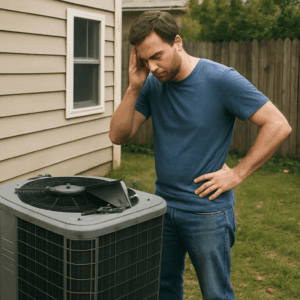
The Three Categories Worth Avoiding
1. Direct-to-consumer “white label” imports. Unfamiliar brand names sold almost exclusively through online marketplaces, mass-produced overseas and rebranded before shipping. The core problem isn’t necessarily the hardware — it’s support. If a proprietary fan motor fails in year three, finding a replacement part or anyone willing to service it can be genuinely difficult. Prioritize brands with an established local distribution and service network over an unfamiliar name that’s simply cheaper online.
2. Builder-grade, bare-minimum models. These are units installed by budget developers specifically to pass inspection at the lowest possible cost — not to perform well for a decade. They’re often sold under a subsidiary label of an otherwise reputable parent company, which is part of what makes them tricky: the parent brand’s name recognition doesn’t carry over to its stripped-down entry line.
3. Brands sold with weak installation requirements. This one matters more than people expect: the majority of premature AC failures trace back to improper installation, not a manufacturing defect. A brand that sells readily to unlicensed installers, without requiring proper vacuuming, brazing, and refrigerant charging, will show a high real-world failure rate regardless of how the equipment itself was engineered.
A Red-Flag Checklist for Any Specific Unit
If you’re evaluating a brand or model — including one you found online with a name you don’t recognize — check for these:
- Cabinet construction: Premium units use heavy-gauge, louvered steel that protects internal coils from hail, debris, and lawn equipment. A thin wire guard leaving the coil fins exposed is a cost-cutting tell.
- Missing pressure switches: Quality units include high- and low-pressure safety switches that shut the system down if refrigerant drops or pressure spikes. Omitting this roughly $10 part means a minor issue can run unchecked until it destroys a $1,500+ compressor.
- Unusually loud operation: A condenser that sounds noticeably louder than a comparable unit nearby often points to poor compressor insulation and unbalanced fan blades.
- Outdated refrigerant: Confirm the unit uses a currently approved refrigerant (R-410A, or the newer R-454B/R-32 generation) rather than something being phased out.
- Suspiciously light weight (window/portable units especially): A 10,000 BTU unit that feels unusually light typically means thin coils and an undersized compressor inside.
- No published warranty registration process: Reputable manufacturers offer online registration within 60 days of install for a full parts warranty, commonly 10 years including the compressor. If that process doesn’t exist or isn’t easy to find, that’s worth noting.

Failure Patterns Worth Knowing
A few specific issues show up disproportionately in budget-tier equipment, and they’re worth recognizing by name:
All-aluminum micro-channel coils. Several manufacturers experimented with automotive-style micro-channel coils in residential units to cut costs. They held up fine in cars; in home HVAC systems, several lines developed leaks within just a couple of years. If you’re comparing options, ask specifically what the evaporator coil is made of and whether that line has a history of leak-related service calls or recalls.
Formicary corrosion in thin coils. Cheap coils, especially thin copper or aluminum, are more prone to a specific corrosion process where household VOCs interact with condensation to eat microscopic pinholes into the metal. The result is a system that mysteriously loses refrigerant repeatedly, with no single obvious leak point — expensive to keep recharging and not great for the environment.
Read the Warranty Fine Print
The warranty is your real safety net, and the fine print is where budget and premium equipment diverge most.
- Compressor coverage: Look for a full 10-year parts warranty including the compressor, contingent on registering online within 60 days of install (standard among reputable brands).
- What’s actually covered: Some budget warranties don’t cover the refrigerant needed to refill a system after a compressor replacement — a real cost that catches people off guard.
- Labor is rarely covered past year one, regardless of brand, which is a separate reason a strong equipment warranty matters more, not less.
- Replacement part accessibility: Proprietary communicating control boards and variable-speed motors (common on some premium lines) are excellent while working, but expensive to replace out of warranty. Standard, more universal parts tend to keep long-term maintenance costs lower, worth asking your contractor about directly.

Heat Pumps Wear Differently Than AC-Only Systems
If you’re comparing heat pumps rather than a standalone AC, brand and build quality matter even more, since a heat pump runs year-round — cooling in summer, heating in winter — accumulating roughly twice the operating hours of an AC-only unit over the same period. Budget heat pump lines are more prone to reversing valve failures and early compressor burnout, sometimes before the 10-year mark, where a well-built system routinely runs 15-20 years.
Window Units Deserve Their Own Look
If you’re not in the market for central air, the window and portable AC market has its own version of this problem, often harder to spot because the exterior can look identical across price tiers:
- Weight is the fastest tell — a suspiciously light unit for its BTU rating means thin coils and a small compressor.
- Internal insulation: Shine a flashlight into the vents if you can. Cheap units use unsealed foam to separate the hot and cold sides, which tends to develop mold quickly.
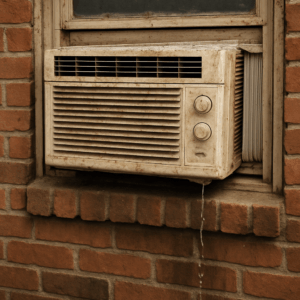
- Drainage design: Units without a proper moisture slinger ring or drain path often produce audible splashing and a rusted bottom pan within a single season.
Four Steps to Buying With Confidence
- Check independent reliability data, not just marketing claims. Consumer Reports and similar independent surveys track which brands generate the most service calls — this changes some year to year, so check current data rather than relying on general reputation.
- Verify Energy Star certification directly rather than taking a salesperson’s word for it — it confirms a manufacturing and efficiency standard, and often unlocks utility rebates or tax credits.
- Ask local technicians what they install, and what they refuse to. Installers deal with callbacks and warranty headaches firsthand; if a licensed local contractor won’t install a particular brand, that’s a stronger signal than any online review, because it’s based on repeated hands-on experience rather than a single unit’s outcome.
- Insist on a Manual J load calculation rather than a square-footage guess. An oversized unit short-cycles and fails to dehumidify properly; an undersized one runs constantly and still doesn’t keep up. Both wear out prematurely regardless of how good the brand is — sizing determines a huge share of real-world reliability, independent of the nameplate.
The Bottom Line
The brand name on the unit matters less than which category it falls into and how it’s installed. Favor established manufacturers with real local support, read the warranty terms closely rather than trusting headline numbers, and treat your installer’s opinion as seriously as any brand’s marketing — in practice, it often matters more.