

How to tell tonnage of ac unit – Complete Guide
How to tell tonnage of ac unit – Complete Guide
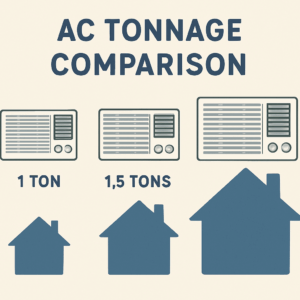
Understanding the tonnage of your AC unit is crucial for efficient cooling. It directly impacts energy use and comfort.
Tonnage refers to the cooling capacity of an air conditioner. It is measured in tons, with one ton equaling 12,000 BTUs per hour.
Knowing how to find the tonnage of an AC unit can help you maintain optimal performance. It ensures your system is neither too small nor too large for your space.
This guide will walk you through the steps to determine your AC unit’s tonnage. You’ll learn where to find tonnage on an AC unit and how to decode model numbers.
Proper AC unit size is vital for energy efficiency and comfort. It can also affect the lifespan and cost of operation.
By understanding your AC’s tonnage, you can make informed decisions about maintenance and upgrades.
What is AC tonnage and why does it matter?
AC tonnage refers to the cooling capacity of an air conditioning unit. It indicates how much heat the unit can remove from a space in an hour. Tonnage is measured in tons, and each ton equals 12,000 BTUs per hour.
Understanding the tonnage is crucial for achieving efficient cooling. Incorrect AC unit size can lead to increased energy costs and discomfort. Both undersized and oversized units pose problems. An undersized unit will struggle to cool adequately, operating constantly and driving up utility bills.
On the other hand, an oversized unit will cool the space too quickly. This causes it to cycle on and off frequently, reducing efficiency and potentially causing wear and tear.
Here’s why AC tonnage is important:
- Efficient cooling performance.
- Energy and cost savings.
- Optimal comfort and humidity control.
Knowing your unit’s tonnage helps ensure a balanced indoor environment. It is key to choosing the right unit for your home.
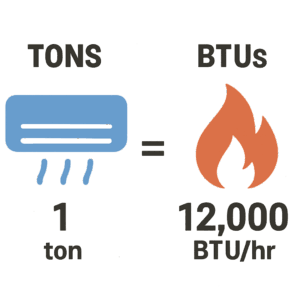
Understanding cooling capacity: Tons vs. BTUs
Cooling capacity refers to an AC unit’s ability to remove heat from a space. This capability is expressed in tons or BTUs (British Thermal Units). While both measure cooling power, they offer different perspectives.
One ton of cooling capacity is equivalent to 12,000 BTUs per hour. This means a 2-ton unit can remove 24,000 BTUs of heat each hour. Understanding these units helps in evaluating and comparing air conditioning systems effectively.
Here’s a quick breakdown:
- BTUs per hour: Measures the heat removed by the AC.
- Tons: A larger measure of capacity equating to 12,000 BTUs.
Selecting an AC unit involves examining its tonnage, which aligns with your cooling needs. Knowing the difference between tons and BTUs will aid in making the right decision for your space.
Where to find tonnage on your AC unit
Locating the tonnage on your AC unit is essential for proper maintenance. It’s usually found on the nameplate or data sticker. This information is essential for understanding the unit’s capabilities.
The nameplate is often placed on the outdoor condenser unit. Look for a metal plate or sticker on the side. It should contain crucial details like the model number and cooling capacity.
In some cases, the tonnage is embedded within the model number. Typically, you’ll see a two-digit number indicating tons. Recognizing these numbers helps in determining the AC’s size.
Here are some common tonnage indicators you might find:
- 18: Indicates a 1.5-ton unit.
- 24: Stands for 2 tons.
- 30: Corresponds to 2.5 tons.
- 36: Suggests 3 tons.
- 42: Means 3.5 tons.
- 48: Signifies 4 tons.
- 60: Represents a 5-ton unit.
If the nameplate is missing or unclear, consult the user manual. Alternately, the manufacturer can provide help. Identifying the tonnage ensures your AC unit operates as intended.
Also Read: How many sq ft does a 2 5 ton unit cool?

by Claudio Schwarz (https://unsplash.com/@purzlbaum)
How to decode model numbers to determine tonnage
Decoding AC model numbers can reveal the tonnage of your unit. Manufacturers often embed this information within the model number. It’s a vital clue for understanding the unit’s cooling capacity.
Typically, you’ll find a two-digit number within the model sequence. This number signifies the unit’s capacity in thousands of BTUs. Knowing how to read these numbers helps in assessing your AC’s size.
Here’s a quick guide to decoding common model number indicators:
- 18: Equals 18,000 BTUs or 1.5 tons.
- 24: Represents 24,000 BTUs, equivalent to 2 tons.
- 30: Indicates 30,000 BTUs, hence 2.5 tons.
- 36: Means 36,000 BTUs or 3 tons.
- 42: Stands for 42,000 BTUs, translating to 3.5 tons.
- 48: Shows 48,000 BTUs, or 4 tons.
- 60: Implies 60,000 BTUs, equating to 5 tons.
Deciphering these codes requires attention to detail. The sequence and numbers can vary between manufacturers. Always cross-check with product documentation for accuracy.
If you’re unsure about the model number interpretation, contact the manufacturer for clarification. Their assistance can ensure you understand your AC’s capacity. This knowledge is key to managing home comfort and efficiency.
Also Read: Air conditioner brands to avoid

by Marcel Eberle (https://unsplash.com/@marcel_eberle)
Other ways to determine the tonnage of an AC unit
Aside from decoding model numbers, there are alternative methods to find your AC’s tonnage. The unit’s nameplate or data sticker is a primary source. This sticker usually includes detailed information about the AC unit.
If the nameplate is missing or unreadable, consider checking the user manual. Manufacturers often document specifications, including tonnage, in the manual. In situations where physical documents are unavailable, digital copies can sometimes be found online.
Consulting with the manufacturer directly can also provide clarity. Customer service can confirm tonnage details if you provide the serial and model numbers. Additionally, air conditioning repair professionals have tools and expertise to determine the capacity accurately.
Here are some other resources and methods:
- Contact the manufacturer with the serial number.
- Search for digital manuals online.
- Seek advice from HVAC technicians.
- Check product specifications on the retailer’s website.
Using these approaches ensures you obtain reliable data about your AC’s cooling capacity.
Why proper AC unit size is important
Choosing the right AC unit size is vital for comfort and efficiency. An improperly sized unit leads to various problems. Efficiency and operational costs are affected by this crucial decision.
An oversized AC unit can cool your space quickly. However, it may cycle on and off frequently. This leads to increased wear, decreased lifespan, and uncomfortable temperature fluctuations.
On the other hand, an undersized unit might struggle to maintain desired temperatures. It will work harder and longer, increasing energy consumption and wear. This results in higher energy bills and possibly insufficient cooling.
Proper AC unit sizing provides several benefits:
- Ensures efficient energy use and comfort.
- Prolongs AC unit life with less wear and tear.
- Decreases energy bills and maintenance costs.
by – Kenny (https://unsplash.com/@kennyzhang29)
To reap these advantages, evaluate your home’s requirements carefully. Consulting a professional can help you choose the optimal AC unit for your needs. Regular audits and assessments ensure that your system continues to perform efficiently.
Factors that affect the required tonnage for your space
Several factors influence the appropriate tonnage of an AC unit for your home. These considerations help ensure optimal cooling and efficiency. Evaluating them can lead to better comfort and energy savings.
Firstly, the square footage of the area is critical. Larger spaces typically require higher tonnage. Ceiling height also plays a role as taller ceilings increase air volume needing cooling.
Other important factors include:
- Insulation quality: Better insulation reduces heat transfer.
- Window quantity and size: More windows can increase heat gain.
- Climate conditions: Hotter climates demand more cooling capacity.
- Occupancy levels: More people generate more heat indoors.
Also read: Optimal AC Temperature for Summer Comfort & Savings

by Pablo Sanchez Cuesta (https://unsplash.com/@pablo_saancheezz)
Additionally, appliances and electronics can affect internal heat. The home’s orientation and shading influence cooling requirements as well. Considering these factors helps in selecting a properly sized unit, ensuring both efficiency and comfort in your living space.
Professional methods for determining AC tonnage
For a precise assessment of the AC tonnage needed in your home, consulting with ac repair and installtion professionals is the best approach. These experts use advanced techniques and tools to provide accurate recommendations tailored to your space.
One of the primary methods employed is the Manual J load calculation. This method considers various elements unique to your home, offering comprehensive insights.
Professional assessments include:
- Measuring square footage
- Evaluating insulation and window placement
- Considering occupancy and appliance use
- Factoring in local climate conditions
These factors are meticulously evaluated to ensure your AC system is neither too large nor too small for your needs, promoting efficient and effective cooling.
Common mistakes and misconceptions about AC tonnage
Many homeowners assume bigger AC units will cool their spaces faster. This is a common misconception that can lead to inefficiencies. Oversized units often result in poor humidity control and frequent cycling, increasing wear and tear.
Another typical mistake is neglecting factors like insulation and climate when estimating tonnage. Assuming one size fits all can lead to uncomfortable living conditions and high energy bills.
Misunderstandings to avoid include:
- Selecting units based solely on price
- Ignoring local climate variations
- Overlooking the impact of home design and layout
Being informed about these potential pitfalls can ensure optimal comfort and efficiency, helping you to avoid unnecessary expenses.
Also Read: How long does a central air conditioning unit last?
Key takeaways and next steps
Understanding the tonnage of an AC unit is essential. It affects comfort, energy efficiency, and long-term costs. Accurate knowledge ensures your system is right-sized for your space.
First, check your AC unit for any labels or plaques indicating tonnage. Model numbers can often reveal important clues about cooling capacity. This straightforward step can help you verify the size of your unit.
If you’re unsure or need more detailed analysis, consult an HVAC professional. They can conduct a Manual J load calculation, taking into account all necessary factors. Ensuring your AC unit is correctly sized will promote both comfort and efficiency in your home. Follow these steps to optimize your system and manage energy costs effectively:
- Verify the tonnage using the manufacturer’s details
- Consider professional assessment for precise calculations
- Make informed decisions about energy use and upgrades