
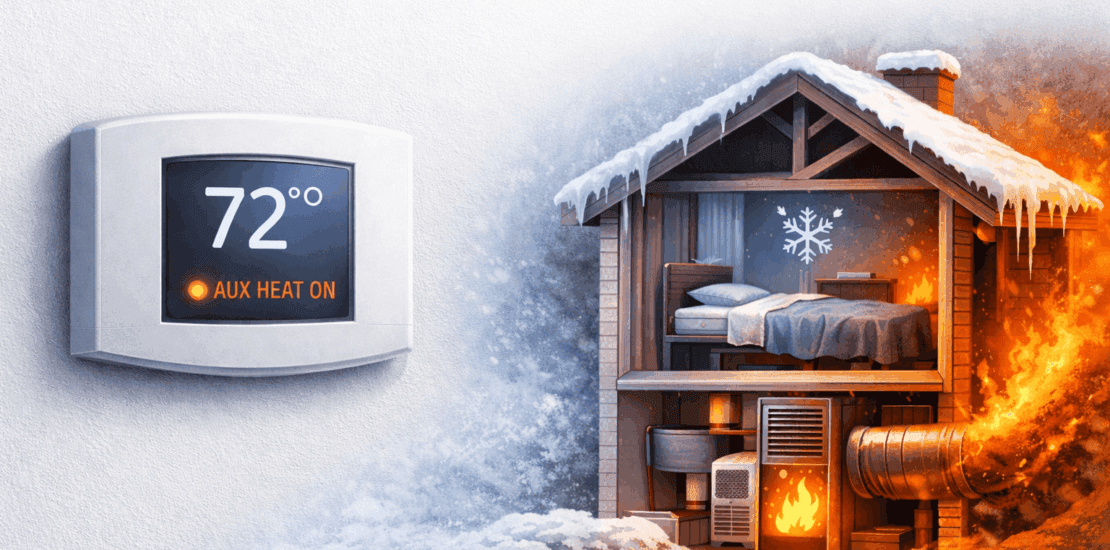
Why does my thermostat say auxiliary heat on
Have you ever noticed your thermostat displaying “auxiliary heat” and wondered what it means? This message can be puzzling for many homeowners. Understanding why it appears is crucial for managing your heating system effectively.
Auxiliary heat is a backup heating source that kicks in when your primary heat pump struggles. It ensures your home stays warm during extreme cold or when the heat pump needs help.
However, auxiliary heat can be more costly to run than your main system. Knowing when and why it activates can help you control energy expenses.
In this guide, we’ll explore the reasons behind the auxiliary heat message and how to manage it efficiently.
Summary
Auxiliary heat is a higher-cost backup stage that turns on when a heat pump can’t maintain the set temperature—often during very cold weather, large setpoint changes, poor insulation, or equipment/size issues. This guide explains how aux heat works, why your thermostat shows it, and the cost and efficiency impacts. It offers ways to reduce reliance (insulation, sealing drafts, smart/programmable controls, proper settings, and HVAC maintenance), plus troubleshooting steps if aux heat runs too long and when to call a professional.
What Is Auxiliary Heat on a Thermostat?
Auxiliary heat, often called “aux heat,” is a secondary heating system. It supports the primary heat pump in maintaining indoor comfort.
Heat pumps are efficient in moderate climates but struggle in extreme cold. When temperatures drop, auxiliary heat steps in. This ensures your home stays warm regardless of the weather.
Typically, auxiliary heating uses electric resistance heating. It can also use other methods, depending on your system’s design. The switch to auxiliary heat happens automatically via your thermostat.
Your thermostat displays “auxiliary heat” to indicate this mode is active. It’s a signal that additional energy is being used to maintain warmth. This is helpful for tracking energy usage.
Some thermostats feature advanced controls for auxiliary heat. These may allow you to set specific triggers for when auxiliary heat activates. Understanding your thermostat’s settings can optimize your system.
Here’s how auxiliary heat typically works:
- Activates when the heat pump can’t maintain the set temperature.
- Uses more energy and is therefore more costly.
- Helps in maintaining comfort during freezing conditions.
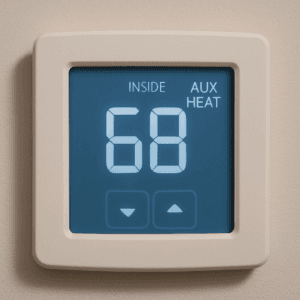
Understanding auxiliary heat can help you manage energy costs. Recognizing when it activates enables smarter heating choices.
How Does Auxiliary Heat Work in a Heat Pump System?
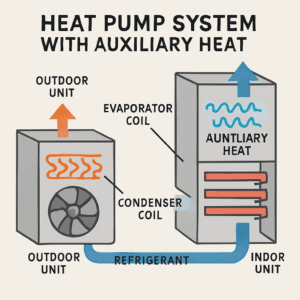
A heat pump system uses refrigerant to transfer heat rather than generate it. This makes it energy-efficient in most conditions. However, when outdoor temperatures fall sharply, the system’s efficiency drops.
In such scenarios, auxiliary heat kicks in to provide necessary warmth. The heat pump’s thermostat detects a dip below the set indoor temperature. It then activates auxiliary heating to compensate for the heat loss.
Auxiliary heat usually relies on electric resistance coils. These coils produce additional heat to supplement the heat pump. Although effective, this method is often more energy-intensive.
In essence, auxiliary heat acts as a backup. It engages when the heat pump alone isn’t enough. This ensures home comfort during extreme cold spells, but at a higher cost.
Here’s a simplified overview of how auxiliary heat functions:
- Monitors indoor temperature through the thermostat.
- Activates when the heat pump fails to meet the temperature needs.
- Supplements heat using electric or other heating methods.
By understanding this process, homeowners can better manage energy consumption. They can adjust settings to reduce auxiliary heat reliance.
Proper maintenance of the HVAC system can prevent unnecessary auxiliary usage.
Common Reasons Your Thermostat Says Auxiliary Heat On
There are several scenarios when your thermostat displays “auxiliary heat.” Understanding these can help you manage your system better and potentially save on energy costs.
One common reason is extremely cold weather. When temperatures plunge, the heat pump alone may struggle to maintain the desired warmth. This prompts the auxiliary heat to step in and assist.
Another reason could be a malfunctioning heat pump. If the primary system is not working efficiently, it may trigger auxiliary heat as a backup solution. Regular maintenance can often prevent this issue.
Improper thermostat settings are another potential culprit. If your thermostat’s temperature set point is too high, it might cause the system to engage auxiliary heat more frequently.
Insufficient insulation and drafts also lead to unnecessary auxiliary heat usage. Cold air enters your home, forcing the system to work harder to maintain warmth.
Here are some frequent triggers for auxiliary heating:
- Cold weather conditions
- Malfunctioning heat pump units
- Improper thermostat settings
- Household drafts and poor insulation
Lastly, thermostats may switch to auxiliary heat because of a sizing issue. An undersized heat pump might not meet your home’s heating demands, thus relying more on auxiliary heating.
It’s essential to identify these causes to optimize your system’s performance. Adjusting your thermostat settings and improving insulation can help manage auxiliary heat usage effectively.
by HUUM (https://unsplash.com/@huumsauna)
Is Auxiliary Heat Bad? Understanding the Costs and Impacts
Auxiliary heat plays a crucial role in maintaining your home’s comfort. However, it’s important to understand its implications on energy use and costs.
Primarily, auxiliary heat is more expensive to run than a regular heat pump. This is due to its reliance on electric resistance heating, which consumes more energy.
Frequent use of auxiliary heat can lead to higher energy bills. It’s essential to be mindful of how often your system relies on this backup heating.
There are several impacts associated with excessive auxiliary heat usage:
- Increased energy costs
- Higher carbon footprint
- Potential strain on the HVAC system
Despite these drawbacks, auxiliary heat provides necessary warmth during freezing weather. It ensures your home remains comfortable when the primary system alone can’t meet demands.
In conclusion, while auxiliary heat is not inherently bad, monitoring its usage is essential. Optimizing your system’s efficiency helps maintain a balance between comfort and cost. Proper thermostat settings and regular HVAC maintenance can mitigate excessive reliance on auxiliary heating.
How to Reduce Auxiliary Heat Usage
Reducing reliance on auxiliary heat can lead to significant energy savings. Here are some strategies that can help.
First, ensure your home is well-insulated. Proper insulation can keep your home warmer, reducing the need for auxiliary heat.
Weatherproofing windows and doors is another effective method. Sealing drafts prevents heat loss, keeping indoor temperatures stable.
You can also consider upgrading to a smart thermostat. These devices optimize energy usage and can reduce unnecessary auxiliary heat activation.
Regular maintenance of your HVAC system is essential. A well-maintained system operates more efficiently and relies less on backup heating.
Another consideration is setting your thermostat to a lower temperature. This prevents frequent triggering of the auxiliary heat function.
Here is a quick list of tips to reduce auxiliary heat usage:
- Check insulation and weatherproofing
- Upgrade to a smart thermostat
- Schedule regular HVAC maintenance
- Adjust thermostat settings to optimize efficiency

by Peter Thomas (https://unsplash.com/@lifeof_peter_)
By implementing these strategies, you can decrease energy bills and increase the lifespan of your HVAC system. It’s a sustainable approach to maintaining home comfort while managing costs effectively.
Troubleshooting: When Auxiliary Heat Stays On Too Long
It can be concerning if auxiliary heat runs excessively. This issue might signal underlying problems within your HVAC system.
Check your thermostat settings first. Incorrect settings might cause the auxiliary heat to activate unnecessarily.
Next, look at the outdoor temperature. Extremely cold weather can trigger prolonged auxiliary heat use.
Inspect your heat pump for any visible issues. If the pump is malfunctioning, it could depend on auxiliary heat more than usual.
Examine your home’s insulation and seal any drafty areas. Poor insulation can lead to more auxiliary heat activation.
Consider if your heat pump is undersized for your home. An undersized system struggles to maintain the desired temperature, relying more on auxiliary heating.
Here’s a handy checklist for troubleshooting prolonged auxiliary heat usage:
- Verify thermostat settings
- Assess outdoor temperatures
- Examine heat pump for damage
- Check home insulation
- Evaluate system size and performance
by Immo Wegmann (https://unsplash.com/@tinkerman)
If auxiliary heat continues to run excessively, it’s wise to consult an heating diagnostic service. Professional evaluation ensures proper diagnosis and effective solutions. This approach helps maintain system efficiency and prevents unnecessary energy consumption.
Tips for Managing Your Auxiliary Heat Thermostat
Effectively managing your auxiliary heat thermostat is key to maintaining comfort and energy efficiency. A few strategic adjustments can make a significant difference.
Familiarize yourself with your thermostat’s settings and features. Understanding how auxiliary heat works with your system is essential for optimal use.
Consider setting a higher temperature threshold for auxiliary heat activation. This ensures it only activates when absolutely necessary.
Utilize a programmable or smart thermostat. These devices can adjust heating patterns based on your preferences and reduce energy waste.
Regularly inspect your HVAC system for signs of wear or damage. Consistent maintenance can prevent issues that lead to excessive auxiliary heat use.
Here’s a summary of tips to manage your auxiliary heat thermostat effectively:
- Understand thermostat settings
- Adjust temperature thresholds
- Utilize programmable/smart thermostats
- Perform regular maintenance checks
Taking these proactive steps can help you control auxiliary heating costs while keeping your home comfortable.
When to Call an HVAC Professional
Knowing when to seek professional help can save you time and money. If your auxiliary heat frequently turns on without apparent cause, consult an HVAC professional.
Persistent issues like unusual noises or spikes in energy bills may indicate underlying problems. An expert can diagnose and resolve these issues.
Attempting complex repairs on your own can lead to more harm than good. When in doubt, calling a trained technician ensures your system operates efficiently and safely.
Conclusion: Making the Most of Your HVAC Thermostat
Understanding your auxiliary heat thermostat can greatly enhance your home’s comfort and efficiency. By learning how it works, you can better manage energy costs and maintain ideal indoor temperatures. This knowledge empowers you to make informed decisions about your heating system.
Regular maintenance and awareness are key to optimal performance. Addressing drafts and insulation issues can reduce the reliance on auxiliary heat. A proactive approach ensures your system runs smoothly.
Consulting with hvac company when necessary safeguards against potential system failures. With the right strategies, you can maximize the benefits of your thermostat.
Embracing these practices helps you achieve a balanced, cost-effective heating solution.