
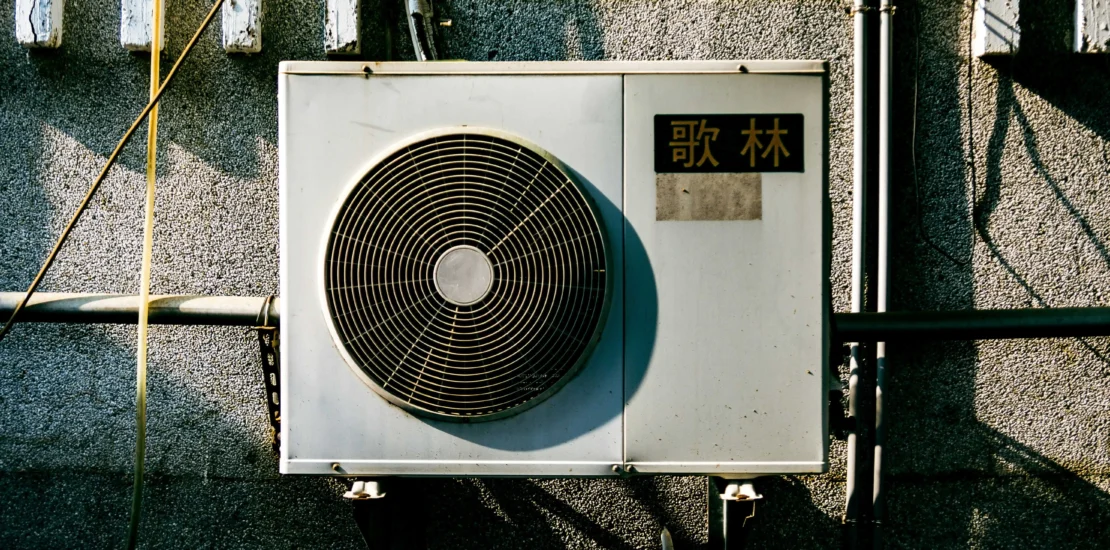
Troubleshooting Your Heat Pump Fan Issues
Is your house suddenly getting warm and stuffy, even though the thermostat is on? You might have noticed a strange silence from the big metal box outside—your heat pump’s fan isn’t spinning. It’s a frustrating situation, but the fix is often much simpler than you think.
Before going any further, know that your system has two different fans. The indoor fan pushes conditioned air through your home’s vents, while the outdoor fan—the one this guide is for—helps the unit get rid of collected heat. If the outdoor fan stops, the entire system can shut down to protect itself.
This guide will walk you through safe, step-by-step checks to diagnose why your outdoor fan isn’t working and potentially save you an expensive service call.
Step 1: Are You Sure It’s Getting Power?
Start with the most common culprit: a simple loss of power. A tripped breaker or a switch in the wrong position can shut down your fan completely, and it’s an easy fix. Check these three power checkpoints in order:
- Thermostat: Set it to Cool and lower the temperature at least 5 degrees below the current room temp to ensure it’s calling for AC.
- Circuit Breaker: Go to your home’s breaker panel and find the one labeled “Heat Pump” or “AC.” If it’s tripped (usually in the middle or “Off” position), flip it firmly back to On.
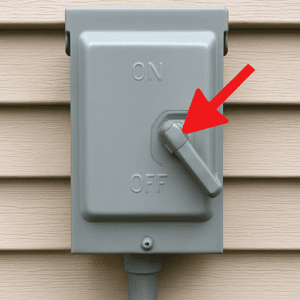
- Outdoor Disconnect Switch: Look for a small metal box on the wall near your outdoor unit. This is a local power shut-off used by technicians for safety. As shown in the image, make sure the lever is in the ON position. Some models have a pull-out handle that must be fully inserted.
If resetting a breaker or switch was the fix, your fan should start spinning within a few minutes. If you’ve confirmed power is on at all three points and the fan remains still, the problem isn’t the electrical supply.
Step 2: Can the Fan Blades Spin Freely?
For your safety, you must turn all power off again at both the circuit breaker and the outdoor disconnect box. With that done, look down through the top fan grille. A fallen stick, a thick pile of impacted leaves, or even a small toy can easily block the blades.
If the path looks clear, test the movement. Using a long stick or a similar blunt tool—never use your hands—gently nudge one of the fan blades. A healthy motor will allow the blades to spin smoothly for a few rotations. If they feel stiff or are completely stuck, the fan motor has likely seized and will require a professional repair.
If you removed a blockage or the fan spun freely, but it still won’t start when you restore power, you might hear a low hum or buzz. That sound is a clue that the motor is getting power but is missing the “jump-start” it needs to get going.
Step 3: What Does That Buzzing or Humming Sound Mean?
A low humming or buzzing sound is a critical clue. When a heat pump is buzzing but the fan is not turning, it usually means the motor is getting electricity but lacks the “kick” it needs to start spinning. This is one of the most common failure symptoms and almost always points to one specific, inexpensive part.
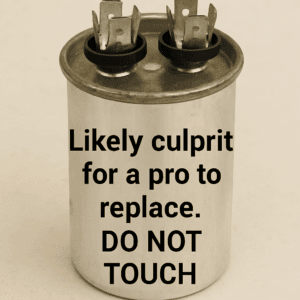
Inside your unit is a small, can-shaped component called a capacitor. It acts like a battery, giving the fan motor a strong jolt of energy to get it spinning from a dead stop. Over years of use, these capacitors weaken and eventually fail. When they do, the motor no longer gets that necessary jump-start, resulting in the tell-tale hum of a motor that wants to work but can’t.
While replacing a capacitor is a quick job for a technician, it is extremely dangerous for a DIY repair. Capacitors can hold a powerful electrical charge long after the power is off. If you hear a hum, you’ve likely found the problem—it’s time to call a professional.
Step 4: My Unit Is a Block of Ice—Now What?
Seeing your outdoor unit encased in ice is alarming, but it’s a huge clue. Often, an issue inside your home causes the unit to freeze, which then makes the heat pump fan stop to protect itself.
The most common culprit for a frozen heat pump is a clogged air filter inside your house. Your system needs to “breathe” by pulling air over its indoor coil. When a dirty filter suffocates that airflow, the coil gets extremely cold and freezes. This ice can build up until the entire outdoor unit is impacted.
Your first step is to set your thermostat to OFF. This stops the cycle and allows the unit to thaw naturally, which can take several hours. While it thaws, change your indoor air filter. A fresh, clean filter restores proper airflow and is often the only fix needed once the ice has melted.
Step 5: When to Call a Technician
If you’ve reset the power, confirmed the thermostat settings are correct, and there’s no ice or debris in sight, you’ve safely done all you can. The problem is likely an internal component, and for your safety, this is the clear boundary where DIY troubleshooting must stop.
An HVAC professional can quickly test for these common failed parts:
- A Failed Capacitor: The most frequent culprit. If you hear a humming or buzzing but the fan won’t spin, a bad capacitor is the prime suspect.
- A Burned-Out Fan Motor: The motor itself can fail. This is a more significant repair, and replacement costs can vary, but a technician can confirm if it’s necessary.
- Faulty Control Board: The unit’s “brain” can malfunction and requires specialized tools for troubleshooting.
When you call an HVAC repair company, help them by providing clear information. Instead of just saying “it’s broken,” tell them exactly what you observed. For example: “My outdoor fan isn’t spinning. I’ve already checked the breaker and the filter is clean. I can hear a humming sound when the unit tries to start.”
This simple description helps the technician diagnose the problem faster, potentially saving you time and money.
A Clear Troubleshooting Path
A silent outdoor unit doesn’t have to be a mystery. You are now equipped to confidently diagnose the most common issues yourself. Keep this checklist handy for any future troubleshooting:
- Check Power: Review your thermostat, circuit breaker, and outdoor disconnect switch.
- Check for Blockages: With the power OFF, clear away leaves, sticks, or debris.
- Listen for Clues: Note any humming (possible capacitor) or grinding (bad motor) sounds.
- Look for Ice: If you see frost, check your indoor air filter for clogs.
- Call a Pro: If these steps fail, you’ve confidently ruled out the basics.
This knowledge gives you control. You can solve simple problems yourself and, if needed, have a smarter, more efficient conversation with a technician.