
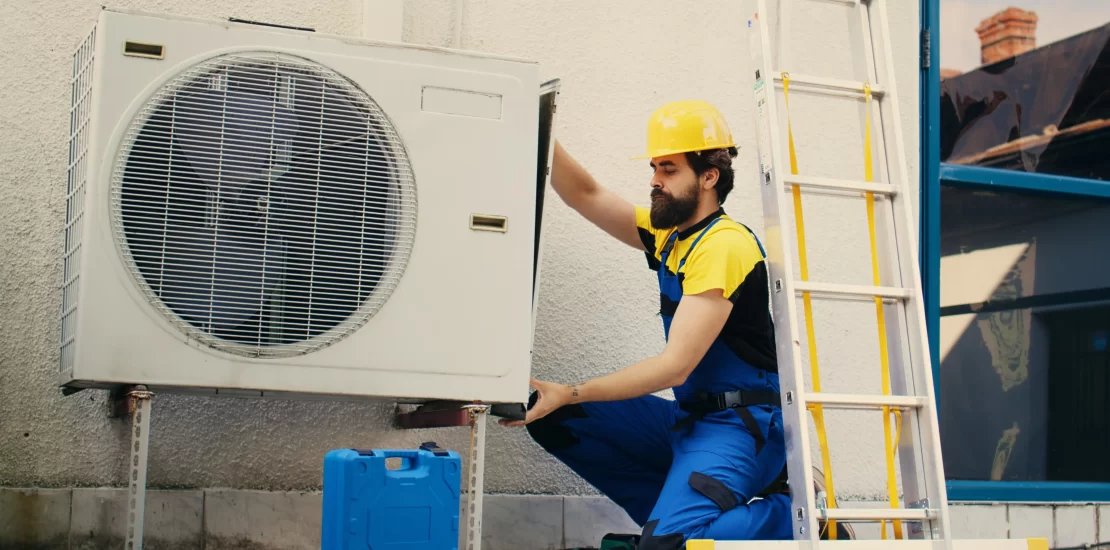
Common Reasons Why the Outside AC Unit Is Not Turning On?
Is your AC giving trouble, especially on a hot summer day? Have you checked to see if your outside ac unit is not turning on? Well, it plays a crucial role in keeping your home cool. If there is an underlying issue with the outside unit, the whole system might crash.
In this blog, we will help you identify the potential causes and also let you know whether you can fix it yourself or it’s time to call a professional to get it done.
What Does an Outside AC Unit Do?
Before we explore the possible reasons why the outside AC unit is not turning on, we must first understand what it does exactly. Your AC has two main parts – the indoor unit and the outdoor unit. The outdoor unit has a fan, condenser coils, and a compressor. Its primary function is to release the hot air captured from inside your home and throw it outside. In simple terms, it’s where all the hot air goes when your AC is cooling your home. If the outside AC unit is not turning on, but the inside is, the entire system is at fault.
What does it mean? Hot home, sweaty clothes, and lots of frustration. What might be causing it? Let’s explore the common reasons for the AC outside unit not working.
Why is the Air Conditioner’s Outside Unit Not Running?
There are several reasons behind your AC not running outside. Some might be easy DIY fixes, while some need professional help. Let’s uncover one by one:
1. Tripped Breaker or Blown Fuse
This is the very first thing to check for. Check if your circuit is broken. Or maybe your fuse has blown? Your AC might be consuming lots of power. A sudden increase in electricity usage or an overload can lead your breaker to trip. This is usually a precautionary safety measure.
So, how to fix it?
If the breaker labeled for the AC or “condenser” is in the “off” position, flip it back on. If it trips again, don’t keep resetting it; this could point to a more serious electrical problem that needs professional attention.
2. Broken Thermostat
Have you ever considered that there might be a problem with the device controlling the AC when your AC unit outside is not turning on?
The thermostat is the control panel of your entire HVAC system installed in your home. If it is broken, or the batteries are down, or it is set incorrectly, your AC might not be running outside.
Check out some quick Fixes for that:
- Set the mode to “cool.”
- Replace the batteries.
- Set the temperature a few degrees below the room temperature.
- Turn off the system and switch it back on.
During any of these actions, if the display is blank or unresponsive, you might have a faulty thermostat.
3. Fan Motor Failure
The fan in your outside unit pulls air through the condenser coils to help release heat. If there is a problem with the fan motor, your air conditioner might not throw cool air or possibly not start at all.
Are you wondering how I would know if my fan motor is the real cause of why my air conditioner is not running outside?
Check the fan but maintain a safe distance. Don’t go too close. Is it spinning? If not, check for any sound or if it’s trying to run when you turn the AC on. If not, there is a wiring problem, a motor issue, or a stuck blade.
Call a technician to check or get it fixed. This is not a DIY job.
4. Frozen Coils
Shocked that your outside unit can freeze even in scorching heat? Yes, it can.
If the airflow inside your AC is blocked due to a dirty filter or blocked vents, it can cause frozen coils. The system automatically shuts down in this case, causing your AC unit not to turn on outside.
Check for visible ice or frost on the outside unit or refrigerant lines. Turn off the unit and let it all thaw. If it happens again, call a technician right away.
5. Capacitor Failure
If the capacitor fails, the fan and compressor in the outside unit won’t start, even when the rest of the system might be fine.
Signs of capacitor failure:
- A humming sound from the unit
- The fan is trying (but failing) to start
- No noise or movement at all
Do not go DIY to repair or replace a capacitor. It involves working with high-voltage parts. Best to leave this one to the pros.
6. Compressor Failure
This is one of the most expensive parts to replace, so let’s hope this is not the issue with the air conditioner not running outside. It can happen due to electrical issues, overheating, or just wear and tear over time.
Call in a professional central ac repair expert to check whether repair or replacement is the better option.
7. Evaporator Coils are Clogged
Dust or debris might clog up on coils, leading to the malfunctioning of your outside unit. This may lead to reduced AC’s cooling performance, poor indoor air quality, and system’s energy efficiency, ultimately preventing the outdoor unit from turning on.
Solution?
Change your filters regularly and schedule regular checks and maintenance.
Still Not Working? It’s Time to Call an HVAC Professional
Some issues can be managed with a DIY approach. On the contrary, issues like refrigerant leaks, electrical faults, or electrical component failures are risky. They need the right expertise, proper equipment, and professionals to fix it. A certified technician will have all the right things to identify the issue and safely fix it.
Here’s how they can help:
Run Diagnostic Tests
It helps find the exact cause of why your AC might not be running outside instead of depending on mere guesswork.
Check Electrical Components
Professionals safely inspect all the elements, including contactors, wiring, and capacitors, which can be damaged, causing the system to fail.
Replace Damaged Parts
Parts like fan motors or compressors use high-quality and reliable components.
Check Refrigerant Levels
A professional inspects and finds leaks and then recharges the system properly to bring the AC cooling back to your home.
A professional technician can do everything safely without further damaging the system. Calling an HVAC expert can stop costly repairs and make your home cool and comfortable again.
Whenever in doubt, call a professional., Don’t take any chances with your AC system. Take smart steps and be safe.